 Knights Templar
Amalric of Jerusalem
Amalric, king of Jerusalem from 1163 to 1174, spent much of his reign trying to prevent Egypt and Syria from coming under a single hostile power. He was the younger brother of Baldwin III of Jerusalem and father of Baldwin IV of Jerusalem, Sibylla of Jerusalem and Isabella I of Jerusalem. Each of the three children would hold the crown.
The Egyptian campaigns
The rulers in Cairo sought outside help against their rivals. Amalric at times defended an Egyptian government from a Syrian army and at other times invaded Egypt himself. In 1168 he broke with his Egyptian allies and marched toward Cairo. William of Tyre records that the Templars declined to join this invasion. The king withdrew. In 1169 Saladin became vizier and acquired the resources of the Egyptian state. A joint Frankish and Byzantine expedition against Damietta that year ended without taking the port.
Constantinople and the Temple
In 1171 Amalric traveled to Constantinople to meet Manuel I Komnenos. The former Templar master Philip of Milly took part in the diplomacy. Relations with Philip’s successor Odo of Saint-Amand were more difficult. When a Templar killed an envoy traveling under royal protection, Amalric insisted on taking the brother into custody. William’s complaint against the master turns on the king’s duty to guarantee safe conduct to someone he had received. Amalric died in 1174, leaving the kingdom to his thirteen-year-old son.
References
- William of Tyre, History, book XX. Chapter 24 identifies Philip as a former master and describes the king’s embassy. Chapters 31–32 recount the killing of an envoy and the dispute with Odo.
- William of Tyre, History, book XXI. Chapters 1–5 on the king’s childhood, coronation and regency, chapters 13–14 on Sibylla’s first marriage and chapters 20–24 and 28–30 on the campaigns of 1177 and 1179.
- William of Tyre, History, book XXII. Chapters 1, 25–27 and 29–30 on Sibylla’s second marriage, Guy’s regency, the coronation of Baldwin V and relief of Kerak.
- William of Tyre, History, book XX. Chapter 5. The Templars’ refusal to join the invasion of Egypt.
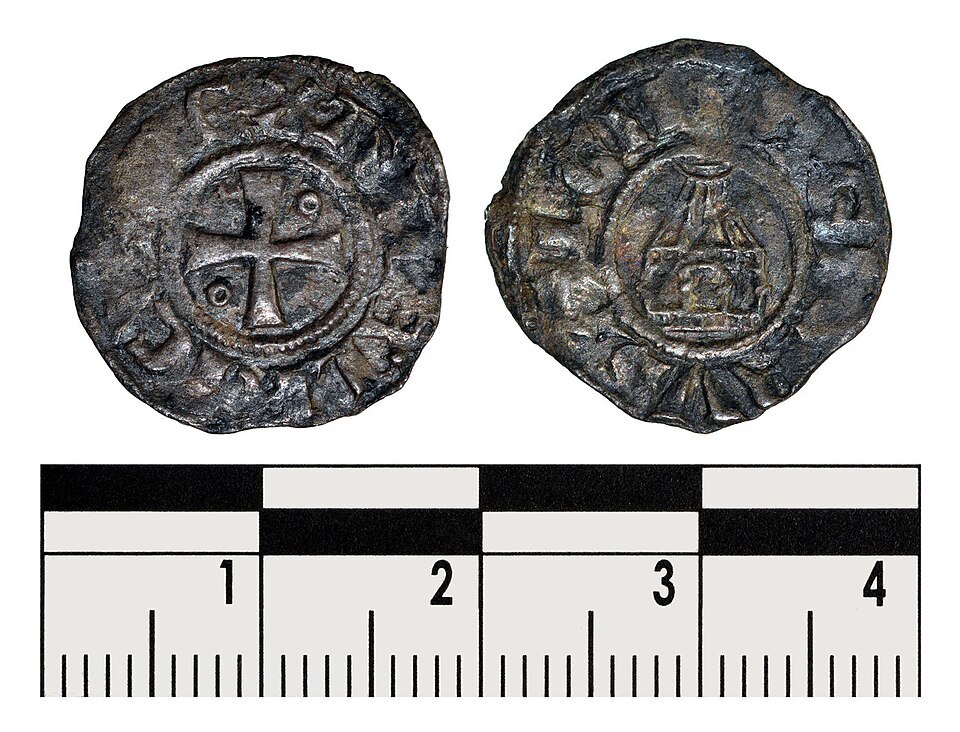
Illustration. The Museum of the Order of St. John and The University of Birmingham. Original image and catalogue record. CC BY-SA 3.0. Resized for display.
