 Knights Templar
Odo of Saint-Amand
Odo of Saint-Amand came to the Temple from the royal household of Jerusalem. He had served as marshal and as butler, both offices of state. As master from about 1171 he fought alongside the king against Saladin, but he also insisted that the order had the right to judge its own men. That claim made him a conspicuously unpopular figure with the chronicler William of Tyre.
From royal marshal to master
Odo was already marshal when he and the Templar master Bertrand de Blanchefort were captured in 1157. Both men returned to public life. Odo subsequently appears among royal officers and, after Philip of Milly resigned, as master of the Temple. The transition had consequences when a Templar killed an envoy traveling under royal protection. Odo claimed jurisdiction over the accused brother. Amalric of Jerusalem had the man seized. William tells the story from the court’s side of a dispute over who could enforce the king’s peace.
Two encounters with Saladin
At the Battle of Montgisard in 1177 Odo brought a contingent of Templars to Baldwin IV of Jerusalem. Their victory over Saladin became one of the best-known successes of Baldwin’s reign. Two years later, at the Battle of Marj Ayyun, the Frankish army broke up and Odo was taken prisoner. William’s description of that day includes a bitter judgment on Odo’s pride. It comes from an author who had already condemned his conduct as master.
Death in captivity
Odo died a prisoner. A later tradition said he had refused an exchange because a Templar could offer only his belt and knife as ransom. The story supplies a memorable last word that the contemporary account does not preserve. His capture and death in captivity are on firmer ground. Arnau de Torroja next appears at the head of the order.
References
- William of Tyre, History, book XVIII. Chapters 13–14 and 25 on the campaign of 1157 and the release of prisoners.
- William of Tyre, History, book XX. Chapter 24 identifies Philip as a former master and describes the king’s embassy. Chapters 31–32 recount the killing of an envoy and the dispute with Odo.
- William of Tyre, History, book XXI. Chapters 22 and 28–29 on Montgisard and Marj Ayyun. William makes his hostility to Odo plain.
- Les familles d’outre-mer, masters of the Temple. Du Cange, revised by E.-G. Rey (1869), pp. 875–883. The editor compares witness lists and corrects earlier attempts at the succession.
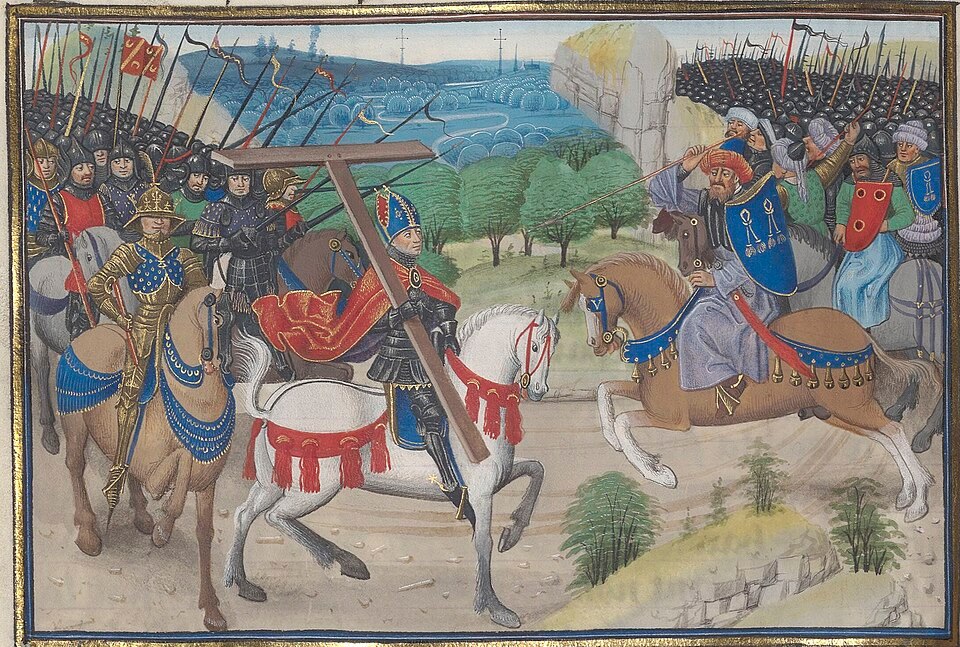
Illustration. Loyset Liédet, Bibliothèque de l’Arsenal, MS 5090, fol. 101v. Original image and catalogue record. Public domain. Resized for display.
