 Knights Templar
Constantinople
Constantinople, modern Istanbul, was the capital of the Byzantine Empire and a meeting point of the Bosporus, the Golden Horn and the Sea of Marmara. For crusaders arriving overland it was a crossing into Asia. For the rulers of Jerusalem it was also the seat of a Christian emperor whose court could provide ships, money, alliances and relics.
The emperor and the Latin kings
Manuel I Komnenos received Amalric of Jerusalem at Constantinople in 1171. William of Tyre described the formal reception and the honors paid to his king. A separate letter by Philip of Milly recalls another kind of encounter. Manuel had given him what the emperor’s family venerated as a fragment of the True Cross. When Philip later sent the relic west he named the emperor to establish how it had come into his hands.
Conquest in 1204
The fleet of the Fourth Crusade brought a claimant to the imperial throne in 1203. Within a year the army that had helped place him in power took the city for itself. Niketas Choniates described the despoiling of Hagia Sophia and the treatment of residents. Church treasures and relics left Constantinople in the hands of western conquerors. Decades later Louis IX of France obtained Passion relics from the Latin imperial court for his Sainte-Chapelle in Paris.
Return to Byzantine rule
In 1261 the city returned to Byzantine government under Michael VIII Palaiologos. The memory of Latin occupation remained a difficulty for relations between the churches. When the emperor’s envoys agreed to union with Rome at the Second Council of Lyon in 1274, the decision made by rulers and delegates did not settle the matter for the Greek clergy and congregations at home.
References
- William of Tyre, History, book XX. Chapter 24 identifies Philip as a former master and describes the king’s embassy. Chapters 31–32 recount the killing of an envoy and the dispute with Odo.
- Philip of Milly’s gift of relics, 1169. The Crusades Regesta, RRR 825. English abstract. Latin edition in La Maison de Craon, I, no. 138.
- Niketas Choniates, account of the sack of Constantinople. English extract from the Byzantine official’s history. The account describes the violation of churches and the seizure of goods in April 1204.
- Centre des monuments nationaux, History of the Sainte-Chapelle. The monument’s historical account of the acquisition of the relics and of the two levels of the palace chapel.
- Second Council of Lyon, constitutions of 1274. See the constitution on the crusade for the proposed six-year ecclesiastical levy.
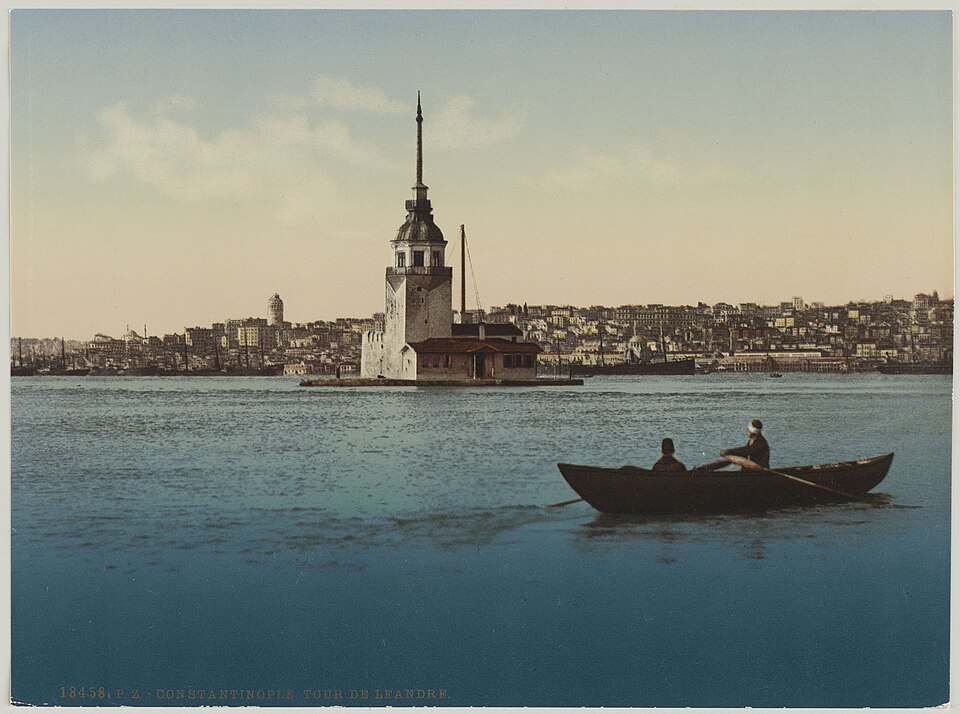
Illustration. Photochrom collection, Zentralbibliothek Zürich. Original image and catalogue record. Public domain. Resized for display.
