 Knights Templar
Louis IX of France
Louis IX (1214–1270) became king of France as a child in 1226. During his reign the French monarchy heard appeals from subjects across the kingdom and built the Sainte-Chapelle in Paris to house relics of Christ’s Passion. To the military orders, Louis was also an unusually persistent ally. Even after his capture in Egypt, he stayed in the East for four years.
A king in captivity
Louis took the cross during a grave illness in 1244 and sailed in 1248. His army occupied Damietta, then marched upriver. His brother Robert of Artois died at the Battle of Mansurah. During the retreat in April 1250 Louis was too ill to continue on horseback and fell into Egyptian hands. He agreed to give back Damietta and pay a ransom. His wife Margaret of Provence held the port while the negotiations went on. Jean de Joinville took part in raising the last of an installment from funds aboard a Templar vessel.
Acre and the last expedition
At Acre, Louis heard arguments for taking the survivors home. He chose to stay. Prisoners were still held in Egypt, and the coastal towns needed money for their defenses. Joinville places the king at work on the fortifications of Sidon and records his quarrel with Renaud de Vichiers over Templar diplomacy with Damascus. Louis returned to France in 1254. In 1270 he led the Eighth Crusade to Tunis, where he died during an epidemic. The church canonized him in 1297. Joinville, who had stayed home on this second occasion, relied on the king’s son for an account of his last hours.
References
- Jean de Joinville, Life of Saint Louis. Translated by Frank Marzials. See the dedication on pp. 135–136, the departure on pp. 163–167, the fighting on pp. 188–203 and the account of captivity, release and the queen at Damietta on pp. 210–235.
- Jean de Joinville, Life of Saint Louis. English translation by Frank Marzials in Memoirs of the Crusades. See pp. 197–203 on Sonnac, 229–231 on the ransom and 263–265 on the Temple’s dealings with Damascus.
- Al-Maqrizi, al-Suluk, account of the crusade of Louis IX. The Egyptian historian compiled his account more than a century after the events. English translation in Chronicles of the Crusades (1848), reproduced by Fordham University. The editorial footnotes are distinct from the chronicle.
- Centre des monuments nationaux, Saint Louis. The king’s household, reforms, foundations and last expedition, from the institution responsible for the Sainte-Chapelle.
- Centre des monuments nationaux, History of the Sainte-Chapelle. The monument’s historical account of the acquisition of the relics and of the two levels of the palace chapel.
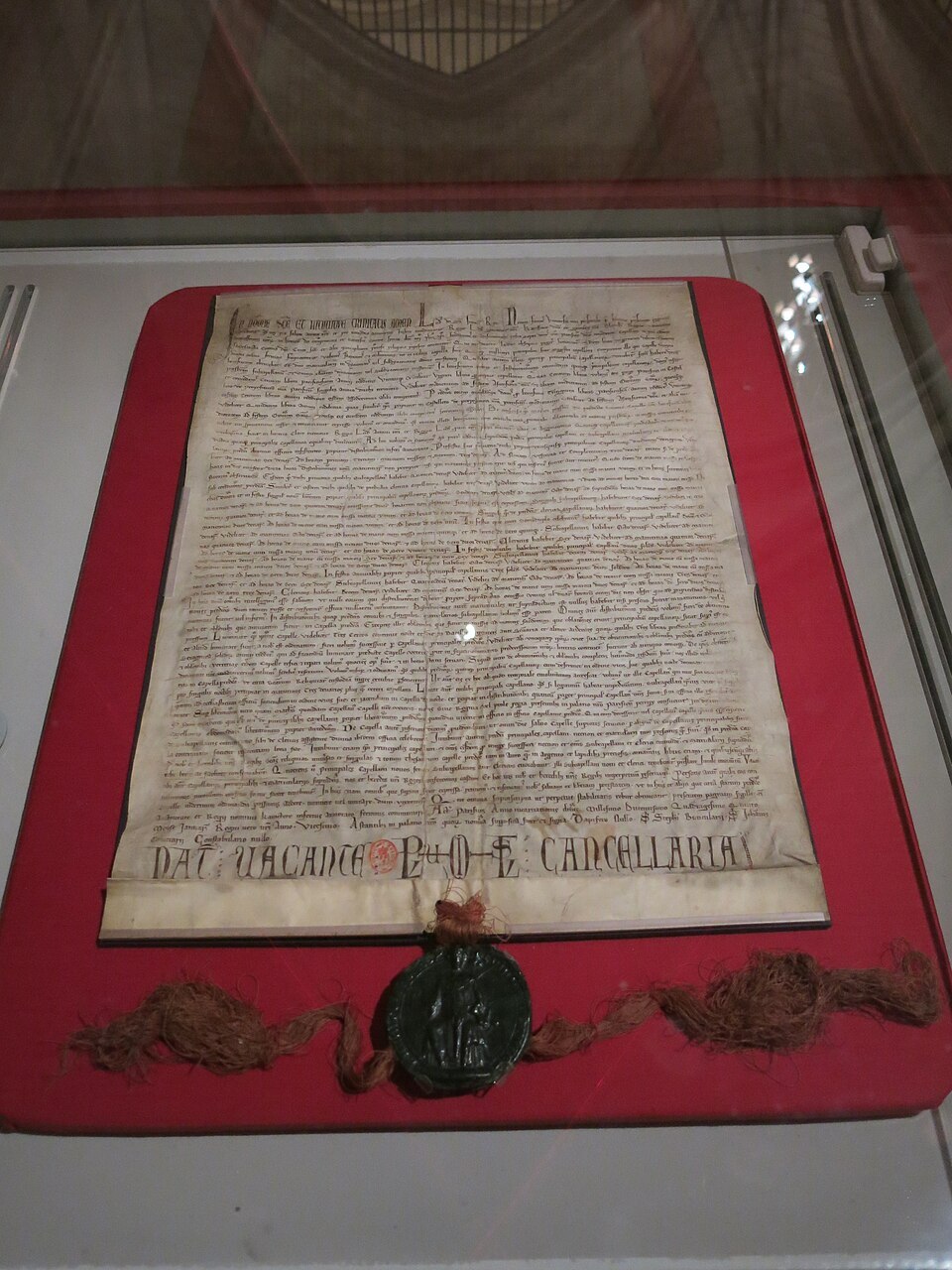
Illustration. Tangopaso. Original image and catalogue record. Public domain. Resized for display.
