 Knights Templar
Sidon
Sidon was a port north of Tyre on the coast of what is now Lebanon. Its sea castle stood offshore, within sight of the town. In 1291 that short stretch of water separated the inhabitants who had left their homes, the soldiers holding the castle and the Mamluk officials arriving to take possession of the coast.
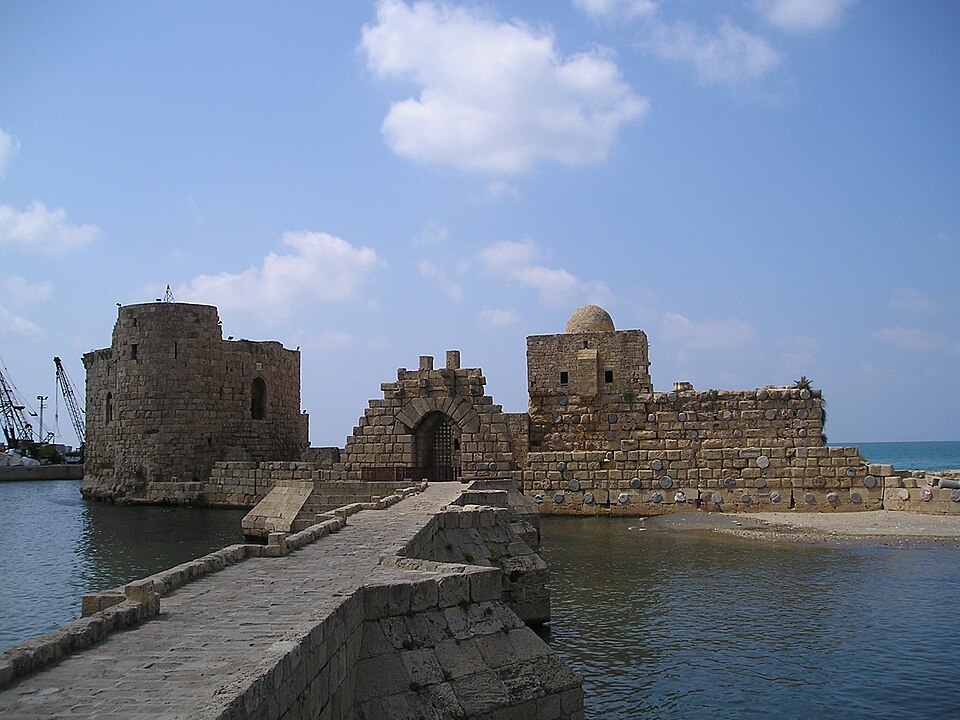
The town and its sea castle
Medieval Sidon included both a settlement on the mainland and defenses at the water’s edge. By the time Acre fell the Templar of Tyre described Sidon as belonging to the Temple. He distinguishes three places in his account of the evacuation, the deserted town, the sea castle into which Templar survivors went and an island with a mill where inhabitants had gathered.
An election after Acre
Thibaud Gaudin, until then a senior commander, reached Sidon with other survivors after William of Beaujeu died. The brothers present elected him master. The Mamluk commander came to take the town and press the garrison. Gaudin sailed for Cyprus after consulting the brothers and promising to send help. The chronicler blamed him for failing to produce it. The defenders finally left at night.
The view from the sultan’s side
Abu al-Fida groups the occupation of Sidon with that of Beirut and emphasizes how quickly the remaining coastal possessions fell after the Fall of Acre (1291). The household chronicler devotes far more attention to the decision to leave and to the people who could find a ship. Between them the accounts preserve both the change of government and the much less orderly evacuation that preceded it.
References
- Templar of Tyre, account of Acre and the refugees. Les Gestes des Chiprois, ed. Gaston Raynaud, §§479–516. See §§498–508 on the city and §§509–516 on Sidon and Cyprus.
- Abu al-Fida, Annals, the conquest of Acre. Historiens orientaux, I, pp. 163–165. Abu al-Fida describes his own part in the expedition and the occupation of the ports. Use the Frankish chronicle for the date 18 May.
- Les familles d’outre-mer, masters of the Temple. Rey’s revised edition, pp. 889–892, collating royal acts, chronicles and records of the trial.
Illustration. Heretiq. Original image and catalogue record. CC BY-SA 2.5. Resized for display.
