 Knights Templar
Battle of Mansurah
On 8 February 1250, the army of Louis IX of France crossed a branch of the Nile opposite Mansurah. By the end of the day the Egyptians still held the town, the king’s brother Robert of Artois was dead, and much of the Templar contingent had been lost. Louis held his ground outside Mansurah for nearly two more months.
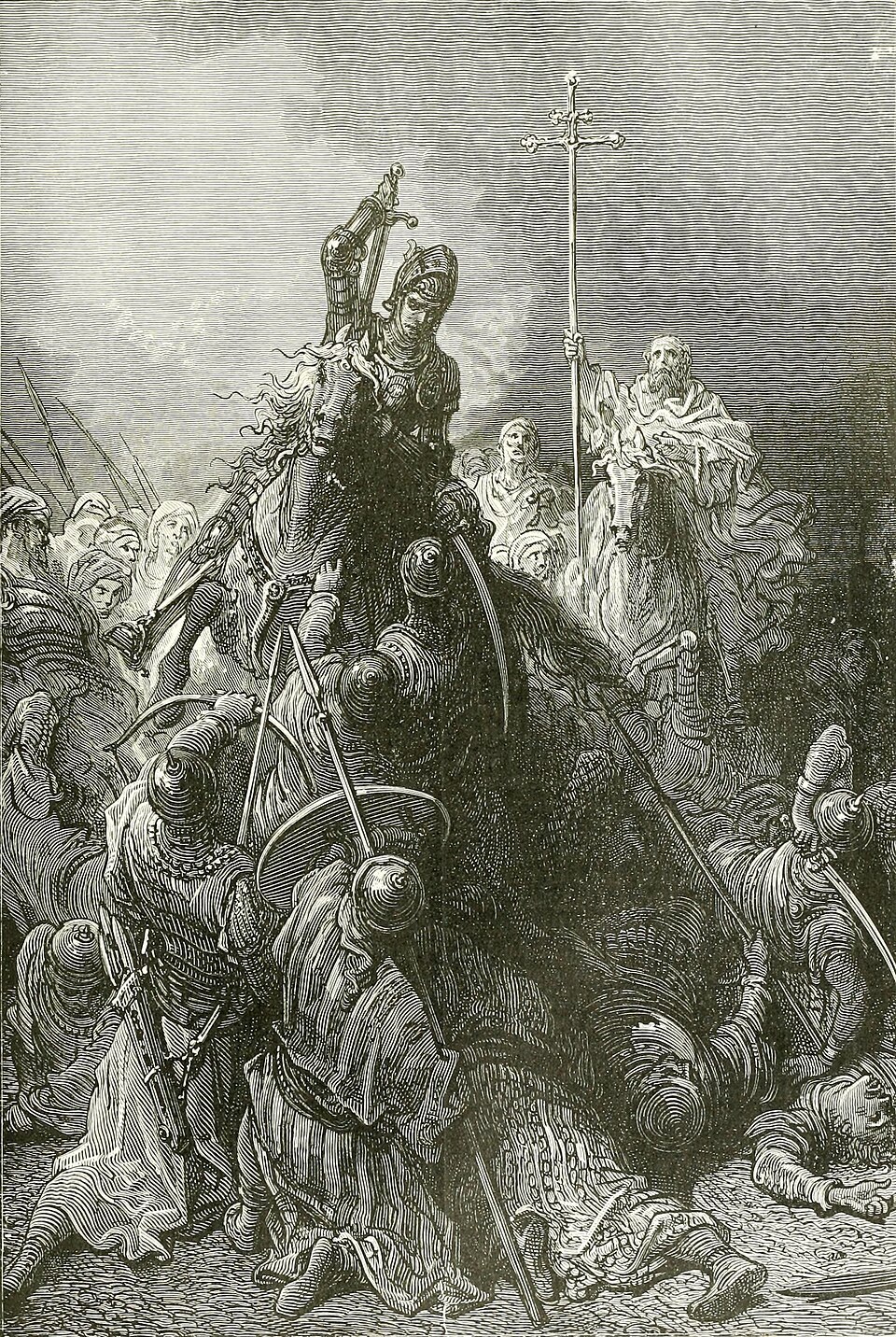
The crossing on Shrove Tuesday
The army had spent weeks trying to bridge the waterway. Jean de Joinville, who crossed on horseback, remembered the horses swimming in midstream and riders drowning where the animals slipped on the far bank. The Templars had been assigned the lead. Once Robert’s men were across, they rode ahead into the Egyptian camp. The Egyptian commander Fakhr al-Din ibn al-Shaykh was killed in the surprise. Robert and the Templars followed the retreat into the town while much of the royal army had yet to cross.
The fighting in town
In the streets the pursuers lost contact with the king. Joinville describes timber thrown down on the mounted men as they tried to get out. He was fighting elsewhere and attributed his estimate of Templar losses to the master, William of Sonnac. Writing much later, al-Maqrizi credits the sultan’s household troops under Baybars with recovering the town. He also records two messages sent by pigeon to Cairo. The first announced the loss of the Egyptian camp. The second brought news that the French had been driven back.
Outside the walls
William survived the fighting on Tuesday with the loss of an eye. On Friday, 11 February, Egyptian forces attacked the crusaders outside the town. Joinville says William lost his other eye and died. The French still had a camp on the river, but their food came by boat from Damietta. When Egyptian forces intercepted the convoys, sickness and hunger spread. The retreat ended in the surrender at Fariskur in April.
References
- Jean de Joinville, Life of Saint Louis. Translated by Frank Marzials. See the dedication on pp. 135–136, the departure on pp. 163–167, the fighting on pp. 188–203 and the account of captivity, release and the queen at Damietta on pp. 210–235.
- Al-Maqrizi, al-Suluk, account of the crusade of Louis IX. The Egyptian historian compiled his account more than a century after the events. English translation in Chronicles of the Crusades (1848), reproduced by Fordham University. The editorial footnotes are distinct from the chronicle.
Illustration. Gustave Doré. Original image and catalogue record. Public domain. Resized for display.
