 Knights Templar
Baybars
Baybars was Mamluk sultan of Egypt and Syria from 1260 to 1277. Brought into the region through slavery, he rose through military service and ruled from a court whose authority reached from the Nile to northern Syria. His conquests changed the map of the mainland during the mastership of Thomas Bérard.
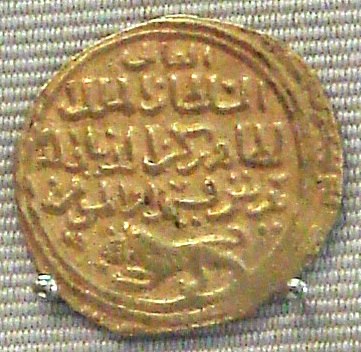
From military slavery to the sultanate
Abu al-Fida preserved traditions of Baybars’s early life in the lands north of the Black Sea and his arrival as an enslaved boy in Syria. The historian reports uncertainty about his precise birthplace. Baybars rose in the military households of Ayyubid Egypt. By the Seventh Crusade he was a commander, and in 1260 he took power in the aftermath of the Mamluk victory over the Mongols at Ayn Jalut.
The fortresses and their inhabitants
At Safed in 1266 the sultan won possession of a Templar stronghold and its surrounding district. Both the Arabic annals and the Templar of Tyre report that the garrison was killed after assurances of safety. The Arabic account also records Baybars returning to inspect the site. Antioch fell in 1268, with severe losses and enslavement among its inhabitants. In 1271 he received the surrender of Krak des Chevaliers, a major castle of the Hospital.
Death and succession
Baybars died at Damascus in 1277. Abu al-Fida says that his death was initially kept quiet while the army returned and the succession of his designated son was secured. His body was buried in Damascus. Later sultans continued his expansion along the coast. Qalawun took Tripoli in 1289, and al-Ashraf Khalil took Acre in 1291.
References
- Abu al-Fida, Annals, notice of Baybars. Historiens orientaux, I, under 676 AH. The historian recounts traditions about the sultan’s origins, the succession and his burial at Damascus.
- Abu al-Fida, Annals, events of 664 AH. Recueil des historiens des croisades, Historiens orientaux, I, p. 151. The Arabic text and French translation recount the capitulation at Safed and the killing of the garrison.
- Templar of Tyre, account of the loss of Safed. Les Gestes des Chiprois, §§345–348, pp. 179–181, on the garrison, its envoy and the executions.
- Al-Maqrizi, al-Suluk, account of the crusade of Louis IX. The Egyptian historian compiled his account more than a century after the events. English translation in Chronicles of the Crusades (1848), reproduced by Fordham University. The editorial footnotes are distinct from the chronicle.
- Abu al-Fida, Annals, the conquest of Tripoli. Historiens orientaux, I, under 688 AH, on the joint Egyptian and Syrian army, the harbor and the aftermath.
- Abu al-Fida, Annals, the conquest of Acre. Historiens orientaux, I, pp. 163–165. Abu al-Fida describes his own part in the expedition and the occupation of the ports. Use the Frankish chronicle for the date 18 May.
Illustration. PHGCOM. Original image and catalogue record. CC BY-SA 3.0. Resized for display.
