 Knights Templar
Tripoli
Medieval Tripoli stood on the Mediterranean coast of what is now Lebanon. The Frankish port occupied a coastal site at modern al-Mina. The later Mamluk city developed inland near the citadel above the river. References to ships taking people off the walls in 1289 concern the old coastal city.
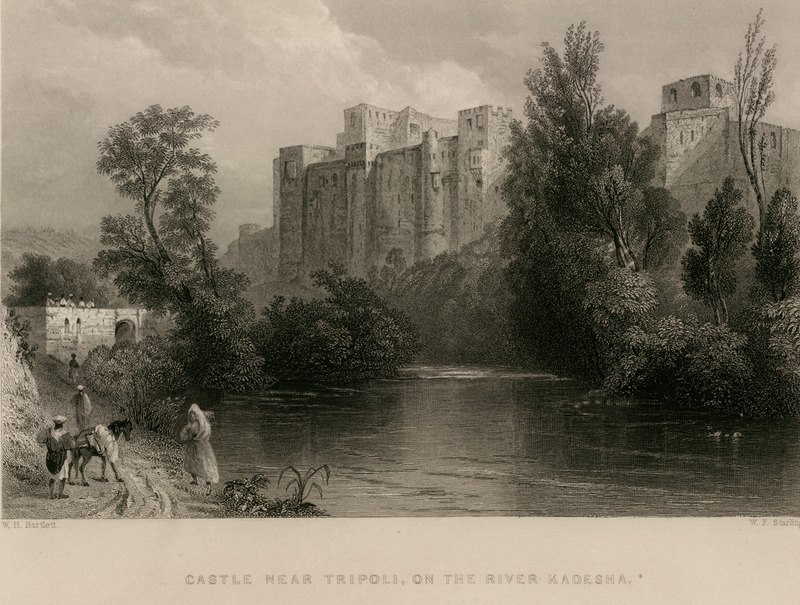
The city and the county
A prolonged siege ended with the capture of the city in 1109. William of Tyre records the disputes among the Frankish claimants while the city was still holding out and the part played by reinforcements arriving by sea. As the seat of a county, Tripoli gave its name to a territory extending well beyond the port. Raymond III of Tripoli drew on that territory while also exercising authority in Galilee and serving as regent of Jerusalem.
The order’s country houses
In his letter of 1202, the Templar master described the destruction of much of the city. His preceding winter had been spent on the county’s inland frontier, where fear of war had emptied villages. In the Tripoli boundary settlement of 1243, the local Templar commander Peter of Saint-Romain represented the interests of those houses. The disputed parcels lay among the castles, fields and watercourses. The business conducted in the county’s name was often about land far from its harbor.
The loss of the port
Qalawun’s forces captured Tripoli in 1289, two years before the fall of Acre. The Templar of Tyre describes people making for the ships as the city fell. Flight to the sea saved some inhabitants. Others were killed or taken into captivity, and a group that sought safety on an island just offshore was overtaken. The end of the county displaced a civilian population as well as the households of its rulers and the military orders.
References
- William of Tyre, History, book XI. Chapters 8–10 on the competing Frankish claims and the capture of Tripoli in 1109. William wrote later in the twelfth century.
- Philippe du Plessis to the abbot of Cîteaux, 1202. The Crusades Regesta, RRR 1509. The master reports conditions on the frontier, earthquake damage, disease and crop losses.
- Settlement between the Temple and Hospital, 1243. The Crusades Regesta, RRR 2422. The act of 31 May names Richard and his office and records the decision of the arbitrators.
- The Templar of Tyre, Chronicle. Part III of Les Gestes des Chiprois, edited by Gaston Raynaud (1887). See §306 on the earlier captivity of Beaujeu and Gaudin and the entries for 1289–1291 on Tripoli, Acre and the remaining coastal towns.
Illustration. John Carne, Syria, the Holy Land, Asia Minor, &c. Illustrated. Original image and catalogue record. Public domain. Resized for display.
