 Knights Templar
Fall of Tripoli (1289)
In April 1289 the Mamluk sultan Qalawun took the coastal city of Tripoli. The fall of the county’s capital came two years before the Fall of Acre (1291). The first-hand experiences later written down by Abu al-Fida and the account of the Templar of Tyre preserve different views of the destruction.
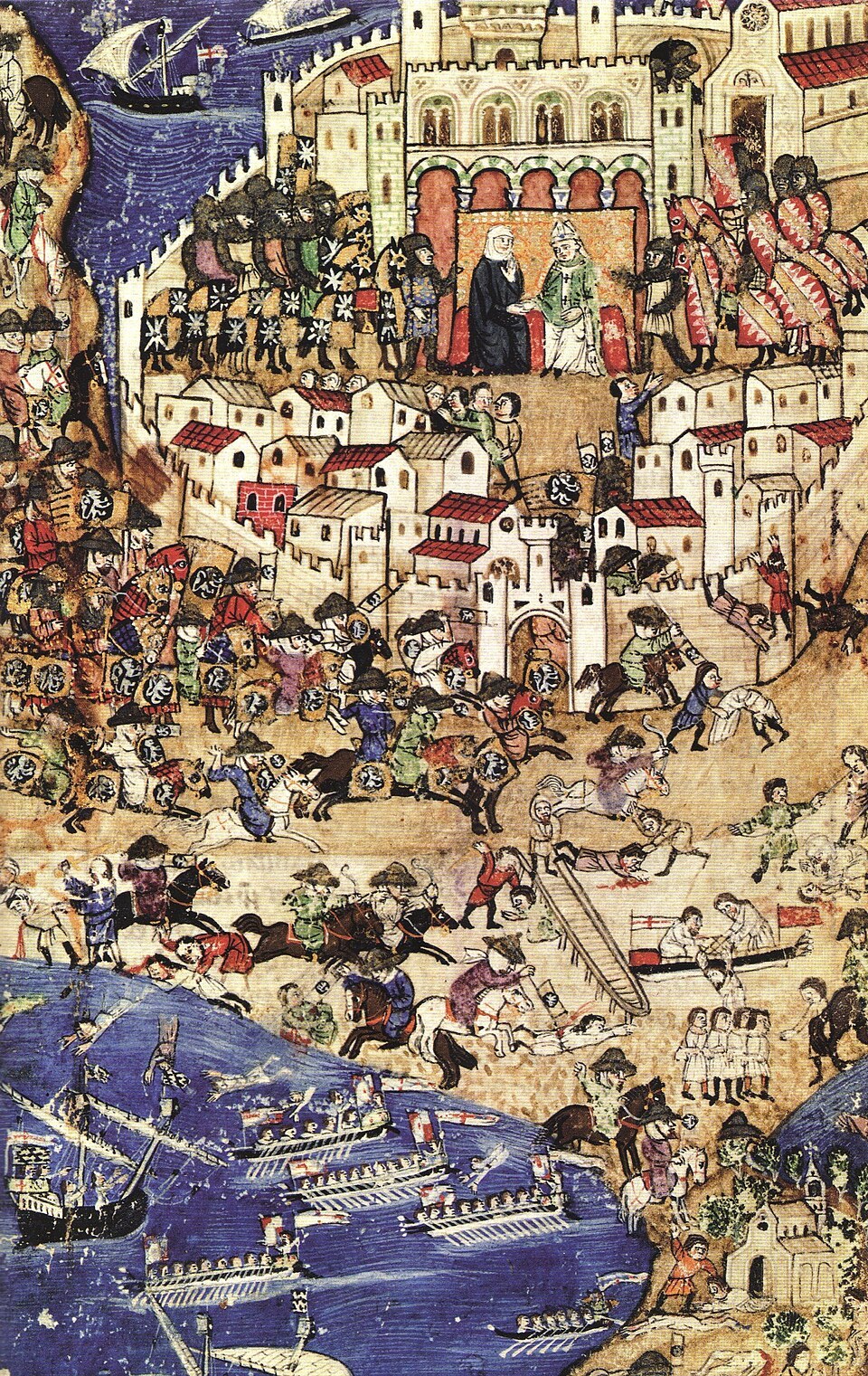
Competing interests in the port
The Templar chronicle describes a divided city. Rival claims to authority and competition among Italian merchants had weakened agreement over who should control the harbor. The chronicler believed the sultan was warned that a Genoese ascendancy at Tripoli might threaten traffic to Alexandria. William of Beaujeu sent warnings of the approaching army. Some in the city doubted his report.
Capture and flight
Egyptian and Syrian forces invested the city. Aid arrived from other Frankish settlements and the military orders. Amaury of Lusignan and the Hospitaller commander Mathieu de Clermont were among those who escaped. Abu al-Fida records the flight to the harbor, the capture of children and the destruction of the city on the sultan’s orders. Those who reached vessels and open water had a chance of escape that many of their neighbors never had. He remembered visiting the offshore island where some residents had fled, and finding the dead still lying there.
The site after the conquest
The old coastal settlement was left in ruins. Under Mamluk rule the center of Tripoli developed inland below the citadel. Descriptions and photographs of the later city must therefore be located with care. The citadel above the river and the medieval waterfront are different places.
References
- The Templar of Tyre, Chronicle. Part III of Les Gestes des Chiprois, edited by Gaston Raynaud (1887). See §306 on the earlier captivity of Beaujeu and Gaudin and the entries for 1289–1291 on Tripoli, Acre and the remaining coastal towns.
- Abu al-Fida, Annals, the conquest of Tripoli. Historiens orientaux, I, under 688 AH, on the joint Egyptian and Syrian army, the harbor and the aftermath.
Illustration. Unidentified manuscript illuminator. Original image and catalogue record. Public domain. Resized for display.
