 Knights Templar
Safed
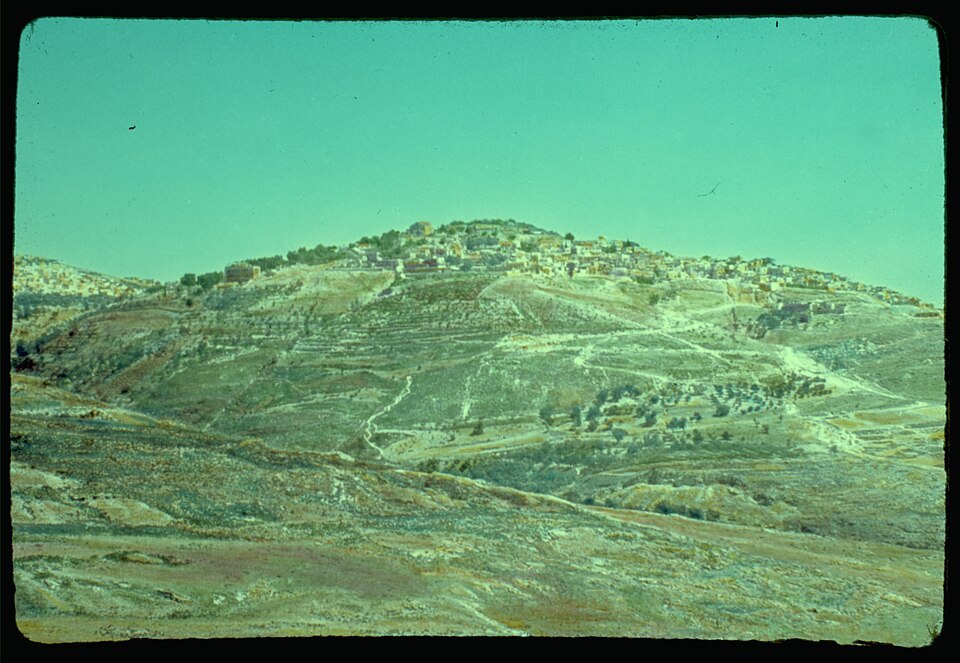
Safed stands on high ground in Galilee, inland from Acre. In 1240 the Templars began rebuilding its castle. A surviving Latin account describes the undertaking from the first stone to the cost of feeding the settlement. Twenty-six years later a Mamluk army took the fortress. Arabic and Frankish histories tell what happened to its defenders.
A bishop and a building site
Benoît d’Alignan, bishop of Marseille, urged the Templar master Armand de Périgord and his council to rebuild Safed while a truce with Damascus held. The building account says that the bishop laid the foundation stone in December 1240. It also says that he pitched his tents on ground associated with a synagogue and a mosque. The writer understood the occupation of these places in explicitly Christian terms. The Jewish and Muslim communities who knew them left no testimony in his account.
A town to feed
Beyond the walls lay a market town. In the writer’s reckoning more than 1,700 people drew provisions in ordinary times, rising to 2,200 in war. His lists included workers, servants and enslaved people as well as the military brothers. He asked readers to imagine the annual deliveries of barley and wheat beside the less easily counted costs of wages, animals and equipment. The figures were offered to explain the burden on the order and to encourage gifts.
The surrender in 1266
When Baybars besieged Safed, the garrison included local Syrian soldiers as well as Franks. The Templar of Tyre says that Leo, an Arabic-speaking brother, negotiated for the defenders. Abu al-Fida likewise records a promise of safety followed by the killing of the garrison. He adds that Baybars later inspected the fortress and provided for its upkeep. Under its new rulers Safed still had a district to govern.
References
- On the Construction of the Castle of Safed, ed. R. B. C. Huygens. Latin text and French introduction. See lines 30–136 on Benoît’s advocacy, 154–212 on his return and the costs, and 250–295 on the district and places of pilgrimage.
- Templar of Tyre, account of the loss of Safed. Les Gestes des Chiprois, §§345–348, pp. 179–181, on the garrison, its envoy and the executions.
- Abu al-Fida, Annals, events of 664 AH. Recueil des historiens des croisades, Historiens orientaux, I, p. 151. The Arabic text and French translation recount the capitulation at Safed and the killing of the garrison.
- Thomas Bérard’s report to England, 1260. The Crusades Regesta, RRR 3289. Letter from Acre dated 4 March, on the Mongol advance and the responses of towns and rulers.
Illustration. G. Eric and Edith Matson Photograph Collection, Library of Congress. Original image and catalogue record. Public domain. Resized for display.
