 Knights Templar
Armand de Périgord
Armand de Périgord served the Temple in southern Italy before becoming master around 1232. His name also appears as Herman in medieval records. His most revealing surviving letter defends an alliance with the Muslim rulers of Damascus and Kerak against Egypt. Months later that coalition suffered a crushing defeat at the Battle of La Forbie.
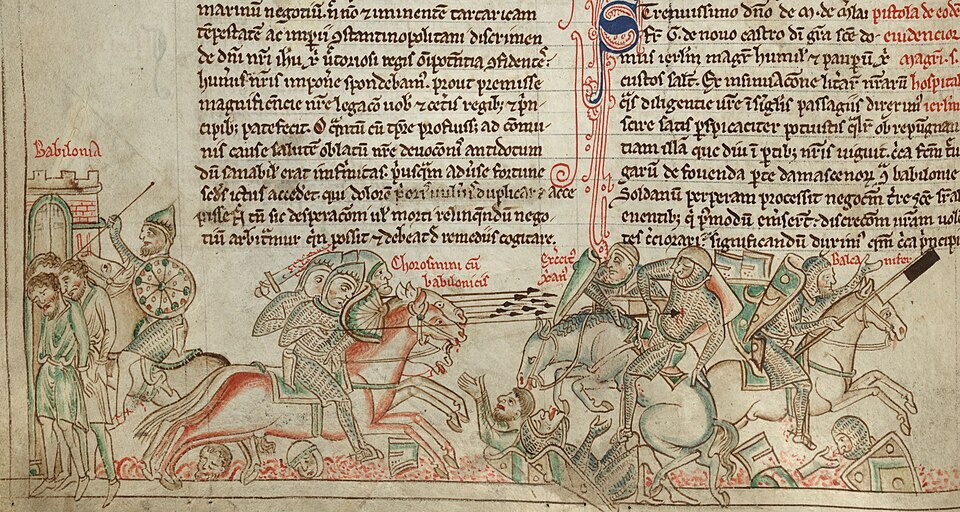
From provincial office to diplomacy
Armand is recorded as a Templar commander in Sicily and neighboring lands before his promotion. In the east, the rivalries among Muslim princes gave the order a choice of negotiating partners. That choice divided the Franks as well. Armand wanted the western brothers to understand why he had abandoned talks with Egypt. According to him the sultan had detained the negotiators for more than six months and retained places he had promised to give up.
The alliance of 1244
In the spring of 1244 Armand sent Robert de Sanford, the preceptor in England, a letter defending the alternative agreement. He told him which territories the allies would return, what the arrangement meant for Christian worship in Jerusalem, and how exposed the Temple was at Gaza. He acknowledged that the policy had few firm supporters among the Franks. We have the master’s case for changing sides, written while he still expected the alliance to hold.
The missing master
In October the Egyptian army and its Khwarazmian allies defeated the coalition near Gaza. Templars and Hospitallers suffered severe losses alongside their Syrian Muslim allies. Reports differ on whether Armand died in the fighting or survived as a prisoner. He disappears from the order’s government. The difficulty of establishing what became of him also helps explain the uncertainty over Richard de Bures, sometimes counted among his successors.
References
- Armand de Périgord’s letter on the Syrian alliance, 1244. The Crusades Regesta, RRR 2459. The master explains his negotiations with Muslim rulers to the Templar preceptor in England.
- Les familles d’outre-mer, masters of the Temple. Rey’s revised edition, pp. 882–889, including variant names, dated documents and the contested succession after La Forbie.
Illustration. Matthew Paris, Corpus Christi College, Cambridge, MS 16 II. Original image and catalogue record. Public domain. Resized for display.
