 Knights Templar
Sicily
Sicily occupies the centre of the Mediterranean, separated from the Italian mainland by the narrow Strait of Messina. In crusading records “Sicily” can mean either the island or a kingdom that extended into southern Italy. A ship sailing from a Sicilian king’s territory might therefore have departed from a port on the mainland.
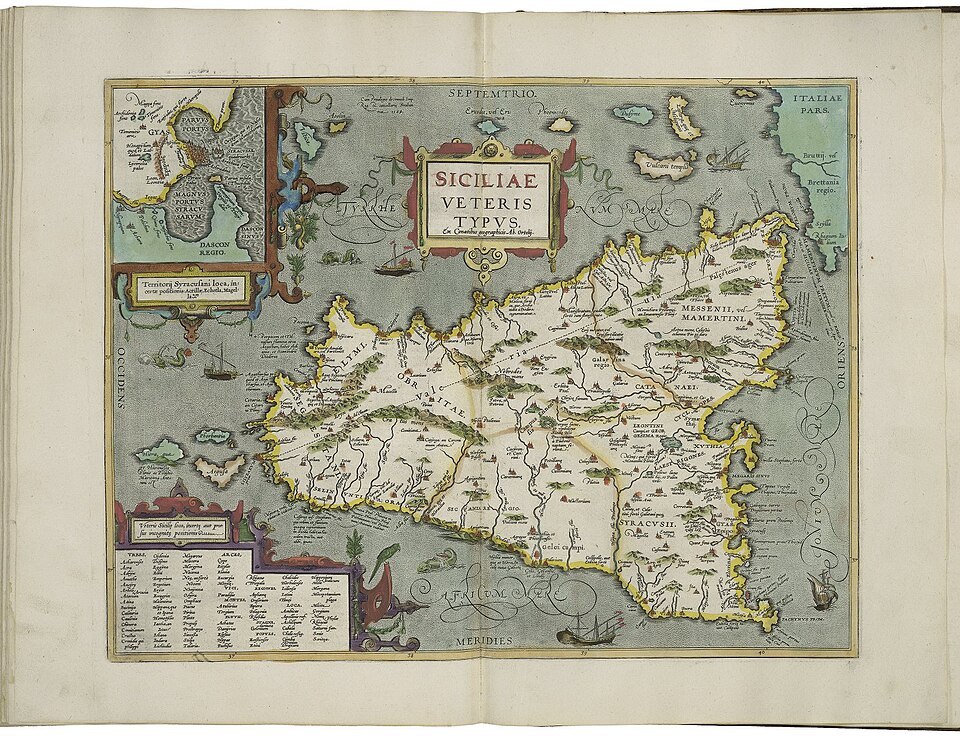
A royal court facing several shores
The Norman kings governed from Palermo. The palace chapel preserves Greek mosaic work beside a painted wooden ceiling made in an Islamic artistic tradition. Latin worship took place in a setting shaped by craftsmen and communities with different languages and religions. That court and its wealth passed to the dynasty into which Frederick II was born. His kingship on the island preceded his imperial coronation by more than twenty years.
Messina and the Third Crusade
In 1190 the fleets of Richard I of England and Philip II of France spent the winter at Messina. Quarrels over the rights of Richard’s widowed sister Joan and clashes between crusaders and residents made the long stop a crisis for the host kingdom. When the weather allowed the fleet to leave, Philip sailed toward Acre and Richard’s voyage took him to Cyprus.
The military orders
The Temple organised its houses across the kingdom, drawing income, horses and men from both sides of the strait. Armand de Périgord served in the southern Italian province before becoming master of the whole order. Frederick eventually departed for the East from Brindisi in Apulia. Both careers illustrate how deeply the mainland ports were involved in a kingdom whose usual name was that of its largest island.
References
- Itinerarium peregrinorum, in Chronicles of the Crusades. Accessible English edition, 1882. The narrative of Richard’s expedition appears under the older attribution to Geoffrey of Vinsauf. See the sections on Cyprus and Acre.
- Italian National Tourist Board, Palermo and its Arab-Norman monuments. Institutional descriptions of the royal palace, churches, mosaics and surviving fabric of the Norman capital.
- Les familles d’outre-mer, masters of the Temple. Rey’s revised edition, pp. 882–889, including variant names, dated documents and the contested succession after La Forbie.
- Frederick II and al-Kamil, truce of 1229. The Crusades Regesta, RRR 2098. The register identifies both Arabic and Frankish narratives of the agreement.
Illustration. Abraham Ortelius. Original image and catalogue record. Public domain. Resized for display.
