 Knights Templar
Gaza
Gaza lay on the coastal route between Egypt and the Kingdom of Jerusalem. In the twelfth century it served as a Frankish stronghold facing Egyptian-held Ascalon. A century later, control of Gaza was still one of the issues over which Muslim and Christian rulers exchanged envoys.
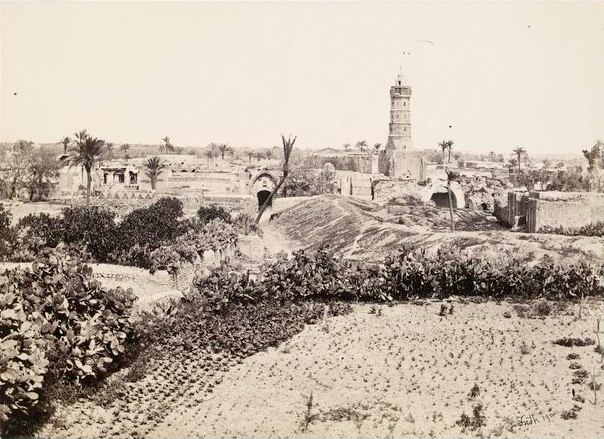
A castle on the southern road
William of Tyre describes the decision of Baldwin III of Jerusalem to establish a stronghold at Gaza and entrust it to the Knights Templar. The garrison stood south of Ascalon. For the Egyptians, this meant a hostile post on the road to one of their own coastal cities. For the king it provided a base that could draw on the Temple’s men and resources between royal campaigns. The capture of Ascalon changed the frontier again.
Negotiations and defeat in 1244
The master’s letter of 1244 names Gaza among the places the Egyptians had promised and retained. Writing later in the same letter, Armand said the Templars now kept watch at the entrance to the kingdom there with help from Damascus and Kerak. The Battle of La Forbie was fought near Gaza that autumn. In al-Maqrizi’s account, Egyptian commanders took possession of the town after the victory.
References
- William of Tyre, History, book XVII. Latin text. Chapters 12 and 21–30 describe Gaza and the siege of Ascalon.
- Ibn al-Qalanisi, The Damascus Chronicle of the Crusades. Translated by H. A. R. Gibb (1932), pp. 315–317, on the fall of Ascalon.
- Armand de Périgord to Robert de Sanford. Latin text in Matthew Paris, Chronica majora, ed. H. R. Luard, vol. IV, pp. 288–291. The printed p. 289 opens with the English preceptor’s name and office.
- Al-Maqrizi, al-Suluk, account of the crusade of Louis IX. The Egyptian historian compiled his account more than a century after the events. English translation in Chronicles of the Crusades (1848), reproduced by Fordham University. The editorial footnotes are distinct from the chronicle.

Illustration. Francis Frith, 1862–1863. Original image and catalogue record. Public domain. Resized for display.
