 Knights Templar
Siege of Ascalon (1153)
From January to August 1153 Baldwin III of Jerusalem besieged Ascalon, the Egyptian-held city between the Frankish ports and Gaza. Its fall deprived the Fatimid government of its principal remaining foothold on the Palestinian coast. The Templar master Bernard de Tremelay was killed before the defenders surrendered.
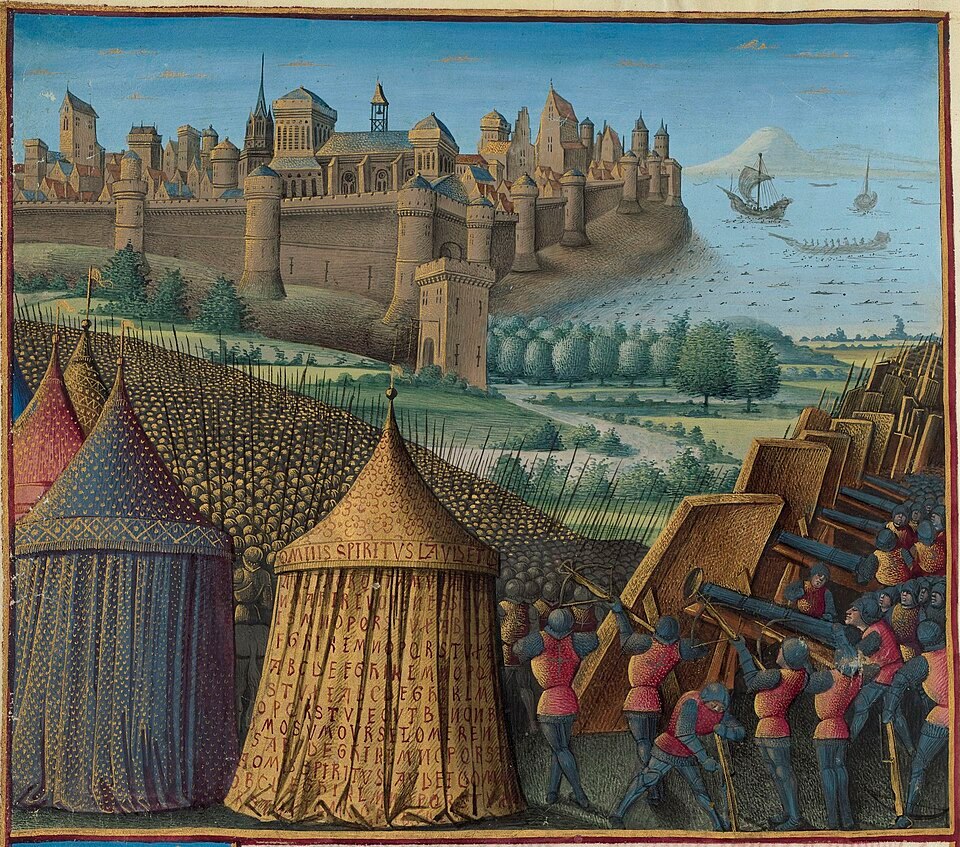
Supplying the two armies
William of Tyre describes an operation that began outside the city’s orchards and grew into a sustained siege. The arrivals of pilgrims brought the besiegers additional men and material. For the defenders, the sea offered another lifeline. An Egyptian fleet arrived several months into the siege and carried supplies past the besiegers. For a time both sides could hope that reinforcements by water would decide the issue.
Losses at the breach
In August fire and damage to the defenses opened a way into the city. Bernard entered with a group of brothers and was cut off. William blamed the Templars for keeping other men back in the hope of securing plunder. He wrote years later. His accusation about their intentions rests on different evidence from the fact that the master and his companions died inside the breach.
The inhabitants’ departure
The besiegers continued after the reverse. Delegates negotiated safe departure for the inhabitants with their families and movable goods. Many went to Egypt. The Damascene chronicler Ibn al-Qalanisi recorded the loss from the Muslim side. The city passed into Baldwin’s kingdom and later became the place from which Baldwin IV of Jerusalem rode before the Battle of Montgisard.
References
- William of Tyre, History, book XVII. Latin text. Chapters 12 and 21–30 describe Gaza and the siege of Ascalon.
- Ibn al-Qalanisi, The Damascus Chronicle of the Crusades. Translated by H. A. R. Gibb (1932), pp. 315–317, on the fall of Ascalon.
- William of Tyre, History, book XXI. Chapters 22 and 28–29 on Montgisard and Marj Ayyun. William makes his hostility to Odo plain.
Illustration. Jean Colombe. Original image and catalogue record. Public domain. Resized for display.
