 Knights Templar
Hagia Sophia
Hagia Sophia, the Church of Holy Wisdom, was the great imperial church of Constantinople. The sixth-century building commissioned under Justinian I replaced an earlier church destroyed during the Nika revolt. Its history as a place of worship and imperial ceremony made the events of 1204 especially painful to Byzantine observers.
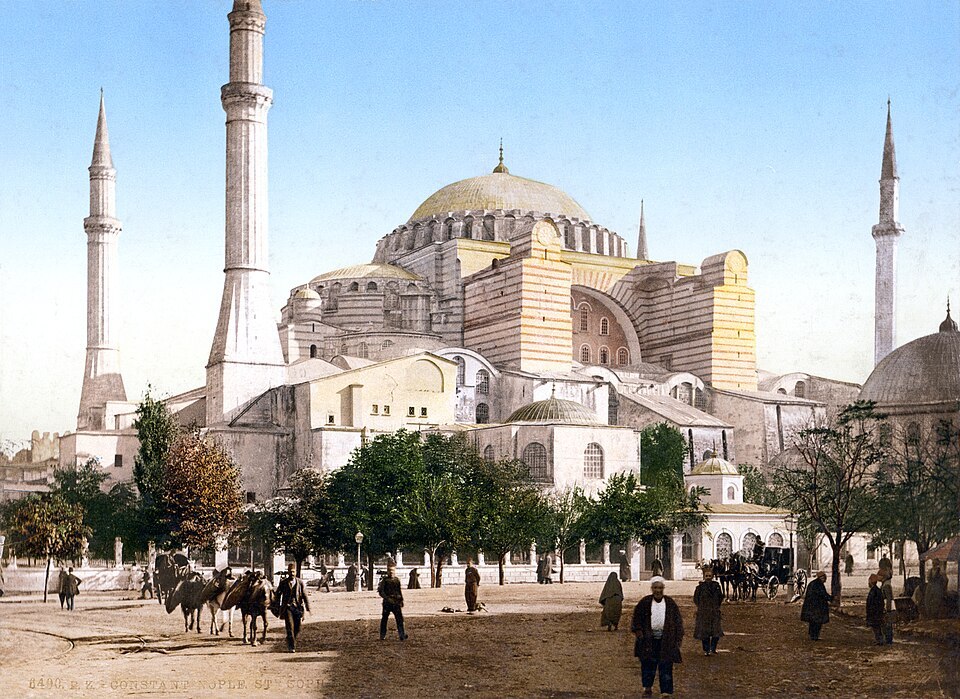
The great church in April 1204
Niketas Choniates describes the violation of the altar and the removal of precious furnishings during the Sack of Constantinople (1204). These objects had a liturgical use and an association with generations of donors and worshippers. The conquerors valued the same objects as portable metal, jewels or relics. The church subsequently served the Latin rulers of the capital until the Byzantine recovery in 1261.
References
- Metropolitan Museum of Art, The Byzantine State under Justinian I. Historical account of the Nika revolt and the reconstruction of the church of Hagia Sophia in Constantinople.
- Niketas Choniates, account of the sack of Constantinople. English extract from the Byzantine official’s history. The account describes the violation of churches and the seizure of goods in April 1204.
- Contemporary accounts of the Fourth Crusade. Translations from the account of Robert of Clari, the sailing agreement and other testimony concerning Venice, Zara, Constantinople and the division of spoils.
- Second Council of Lyon, constitutions of 1274. See the constitution on the crusade for the proposed six-year ecclesiastical levy.
Illustration. Unidentified photographer. Original image and catalogue record. Public domain. Resized for display.
