 Knights Templar
Sack of Constantinople (1204)
In April 1204 the army of the Fourth Crusade broke into Constantinople and plundered the Byzantine capital. It was the second time in less than a year that the fleet had attacked the city. On the first occasion the crusaders had brought a claimant to the throne. On the second they intended to divide the empire among themselves.
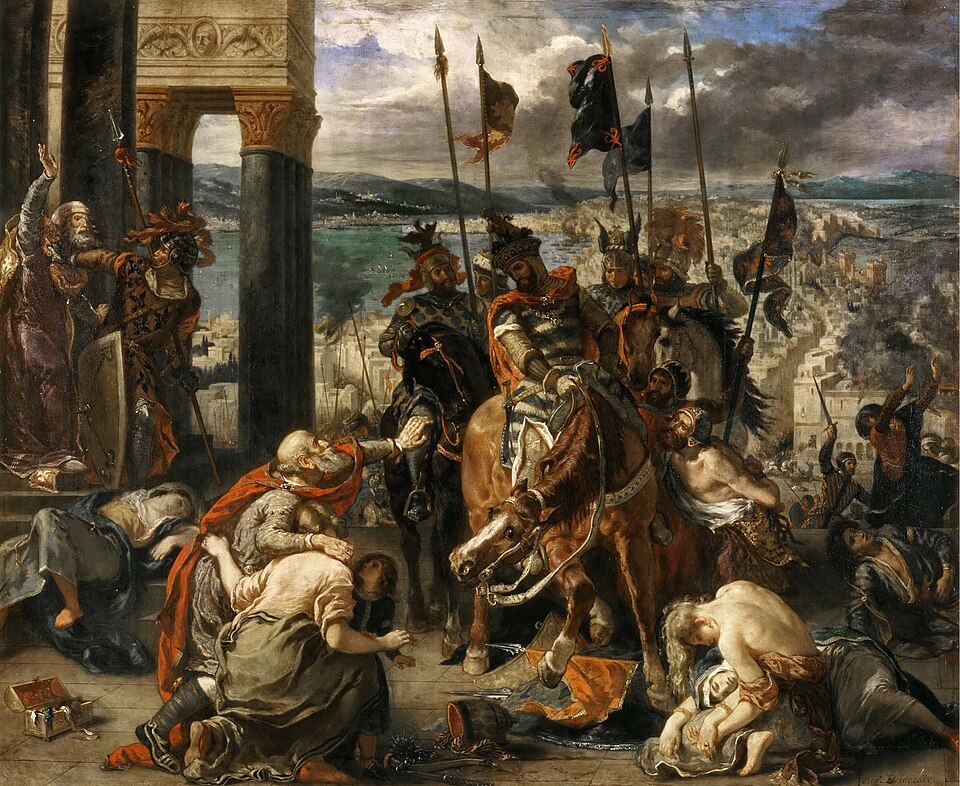
The agreement and the assault
After the overthrow of Alexios IV Angelos, the western leaders agreed on a division of the spoils and on how they would choose a new emperor. Geoffrey of Villehardouin describes the fighting and the collection of valuables for distribution. His account preserves the expectations of those directing the expedition, whose original undertaking had been to go to the Holy Land.
Inside the churches and houses
Niketas Choniates recorded the stripping of church furnishings, the seizure of valuables and acts of violence against inhabitants. The plundering of Hagia Sophia occupies a special place in his account. Western narratives also identify individual relics carried away. For the communities that received them these could be sacred treasures, while for the people from whom they had been taken they were evidence of desecration. A Latin emperor subsequently ruled in the capital. Byzantine government returned in 1261.
References
- Geoffrey of Villehardouin, The Conquest of Constantinople. In Frank Marzials’s translation, Memoirs of the Crusades. The narrative of a participant in the Fourth Crusade.
- Niketas Choniates, account of the sack of Constantinople. English extract from the Byzantine official’s history. The account describes the violation of churches and the seizure of goods in April 1204.
- Contemporary accounts of the Fourth Crusade. Translations from the account of Robert of Clari, the sailing agreement and other testimony concerning Venice, Zara, Constantinople and the division of spoils.
- Second Council of Lyon, constitutions of 1274. See the constitution on the crusade for the proposed six-year ecclesiastical levy.
Illustration. Eugène Delacroix. Original image and catalogue record. Public domain. Resized for display.
