 Knights Templar
William of Chartres
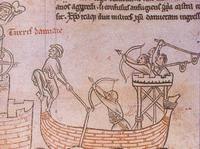
William of Chartres was master of the Temple by 1210. He led it during the preparations for the Fifth Crusade and died in 1219 in the camp outside Damietta. He lived to see the crusaders establish themselves on the Egyptian riverbank, but died before the city surrendered.
A crown and a recovered castle
William appears in accounts of the coronation of John of Brienne in 1210. The return of Baghras to the Temple early in his mastership ended a protracted dispute with the Armenian ruler. The order again held a fortress on the approaches to Antioch. Within a few years William was being asked to commit men and money to an expedition hundreds of miles from that frontier.
The letter from Acre
In October 1217 William told Pope Honorius III of the arrival of crusaders at Acre. Their numbers concealed two shortages. The local harvest had failed, less grain had come by sea than the settlers expected, and there were too few horses. He urged those still on their way to bring food and mounts. He also described a change of plan. Before the newest contingents arrived the leaders had discussed a march toward Nablus. They now favored an expedition against Egypt, in the hope that possession of Damietta would open a way to recover Jerusalem.
Death before the surrender
The siege lasted into a second campaigning season. Disease spread in the camp and William died in the summer of 1219. A grant made there in August already calls Peter de Montaigu master. The city fell in November. These dates separate the two masters’ parts in the campaign. William helped determine why the army went to Egypt. Peter inherited the responsibility for what it would do after taking the port.
References
- William of Chartres to the pope, 1217. The Crusades Regesta, RRR 1767. October letter on provisions, mounts and the proposal to besiege Damietta.
- Grant to Peter de Montaigu at Damietta, 1219. The Crusades Regesta, RRR 1824. An August grant of rents identifies William’s successor during the siege.
- Les familles d’outre-mer, masters of the Temple. Rey’s revised edition, pp. 882–889, including variant names, dated documents and the contested succession after La Forbie.
Illustration. Matthew Paris. Original image and catalogue record. Public domain. Resized for display.
