 Knights Templar
Fifth Crusade
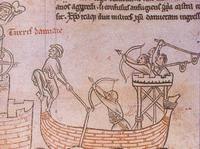
The Fifth Crusade brought western armies to Acre in 1217 and to Egypt in 1218. The leaders hoped that possession of the Egyptian port of Damietta would give them the means to recover Jerusalem. They took Damietta in 1219. Two years later they surrendered it to secure their own return to the coast.
The decision at Acre
William of Chartres wrote to Pope Honorius III in October 1217 as the newcomers assembled. An earlier plan to campaign near Nablus had given way to a proposal to sail for Egypt. William’s letter asked future arrivals to bring grain and horses. A failed harvest in Palestine and disappointing imports meant that the arrival of more men had increased the strain on the kingdom’s supplies.
After the fall of Damietta
The Siege of Damietta (1218–1219) took more than a year. When the Christians finally entered the city they had to garrison both it and other newly occupied positions. In September 1220 Peter de Montaigu wrote from Acre that the papal legate and clergy wished to advance. The secular leaders doubted there were enough men to leave garrisons behind and take a field army upriver. Meanwhile al-Kamil of Egypt prepared a fortified camp and his vessels began to threaten the coast.
The truce of 1221
A fresh army eventually went up the Nile, joined by John of Brienne with ships and barons from the kingdom. The flood and Egyptian vessels cut its connection with Damietta. In a letter to A. Martel the Templar master described the settlement. It included the evacuation of the city, an exchange of prisoners and an eight-year truce. Al-Kamil supplied food to men who had set out to invade his country and could no longer feed themselves.
References
- William of Chartres to the pope, 1217. The Crusades Regesta, RRR 1767. October letter on provisions, mounts and the proposal to besiege Damietta.
- Peter de Montaigu to the bishop of Ely, 1220. The Crusades Regesta, RRR 1858. The master reports opposing views about leaving Damietta to advance into Egypt.
- Peter de Montaigu’s account of the withdrawal from Egypt, 1221. The Crusades Regesta, RRR 1886. Letter from Acre to the order in England after the surrender of Damietta.
Illustration. Matthew Paris. Original image and catalogue record. Public domain. Resized for display.
