 Knights Templar
Frederick I Barbarossa
Frederick I, known as Barbarossa, was elected German king in 1152 and crowned emperor in 1155. He led the largest overland expedition of the Third Crusade. He died on the journey in June 1190, before he could join the armies surrounding Acre.
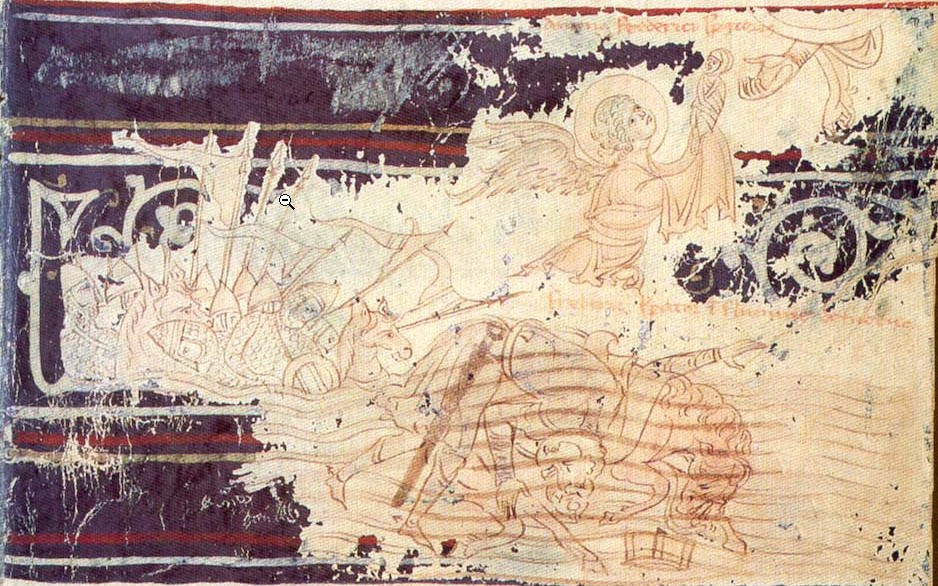
The overland expedition
Frederick set out in 1189. Unlike the kings who sailed from Sicily, his men had to cross the Balkans and Anatolia, securing passage and supplies along the way. After fighting in central Anatolia, the army reached the south of the peninsula. Frederick drowned in the river generally identified as the Saleph, near modern Silifke. Accounts of the precise circumstances differ.
The survivors
The emperor’s death deprived the expedition of the ruler to whom the different contingents had committed themselves. Some men went home. A much smaller force continued to Antioch and the Siege of Acre (1189–1191). News reached Cyprus, where Neophytos the Recluse heard of a German ruler drowned in a river. His account conveys how widely the death was known, though its enormous estimate of the army’s size cannot be taken as a count. Frederick II, who recovered Jerusalem by agreement in 1229, was Barbarossa’s grandson.
References
- Itinerarium peregrinorum, in Chronicles of the Crusades. Accessible English edition, 1882. The narrative of Richard’s expedition appears under the older attribution to Geoffrey of Vinsauf. See the sections on Cyprus and Acre.
- Neophytos, Concerning the Misfortunes of Cyprus. Greek text with English translation in C. D. Cobham, Excerpta Cypria, pp. 9–13. The preceding extract, pp. 6–9, gives the English expedition’s account.
- Baha al-Din Ibn Shaddad, The Life of Saladin. English edition of the Palestine Pilgrims’ Text Society (1897). See chapter CXVI on the captives, the chapters on the march to Arsuf, and the closing negotiations at Jaffa.
Illustration. Illustrator of Peter of Eboli’s Liber ad honorem Augusti. Original image and catalogue record. Public domain. Resized for display.
