 Knights Templar
Siege of Acre (1189–1191)
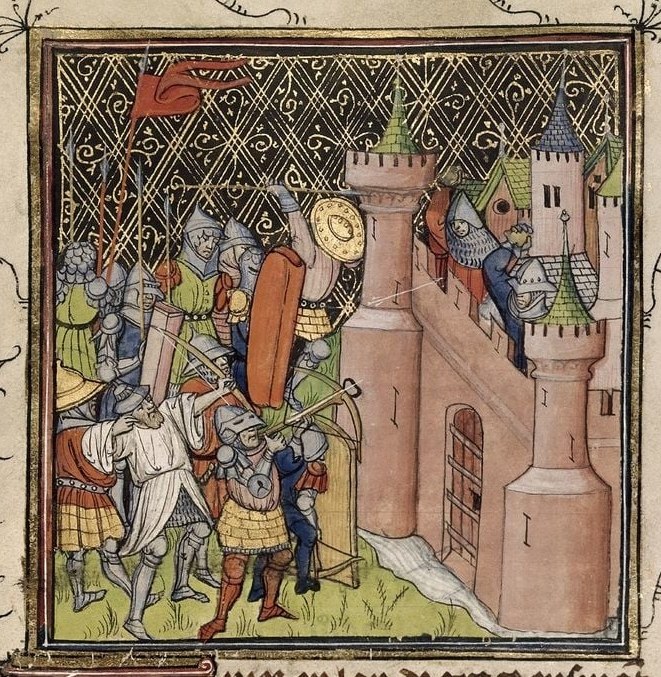
In August 1189 Guy of Lusignan led a small army to Acre, a port held by Saladin since the summer of 1187. Guy established a camp outside the walls. Within weeks his own army was under attack from Saladin’s forces. For nearly two years ships and pack animals had to keep three bodies of men alive around the same stretch of coast.
An army between two fronts
Acre’s garrison could communicate by sea whenever Muslim shipping broke through. The Frankish camp also depended on the harbour approaches for food and reinforcements. Fighting outside the walls cost the Temple its master Gérard de Ridefort in October 1189. Winter weather could interrupt shipping for both sides. Hunger and epidemic disease took a heavy toll. Sibylla of Jerusalem and her daughters died during the siege, putting her husband Guy’s claim to the crown in doubt.
Capitulation
Philip II of France arrived in April 1191. Richard I of England followed in June, after taking Cyprus. Fresh troops, engines and sustained attacks brought the garrison to terms on 12 July. The settlement called for money, the return of Christian captives and the relic of the True Cross. The men who surrendered became prisoners while the terms were being fulfilled.
The prisoners outside the city
On 20 August Richard ordered the killing of thousands of prisoners outside Acre. Baha al-Din Ibn Shaddad, in Saladin’s camp, describes Muslim troops arriving too late and men going out the next morning to identify the dead. Frankish writers blamed delay in fulfilling the surrender terms. The sources disagree over responsibility for the breakdown and the precise number killed. That autumn Robert de Sablé witnessed a royal act in the Temple’s house inside the recovered port. The order held a house there until the Fall of Acre (1291).
References
- Itinerarium peregrinorum, in Chronicles of the Crusades. Accessible English edition, 1882. The narrative of Richard’s expedition appears under the older attribution to Geoffrey of Vinsauf. See the sections on Cyprus and Acre.
- Baha al-Din Ibn Shaddad, The Life of Saladin. English edition of the Palestine Pilgrims’ Text Society (1897). See chapter CXVI on the captives, the chapters on the march to Arsuf, and the closing negotiations at Jaffa.
- Richard I’s confirmation for the Pisans, 1191. The Crusades Regesta, RRR 1316. Issued at the Temple in Acre, 13 October. The witnesses include Robert as master.
- Les familles d’outre-mer, masters of the Temple. Du Cange, revised by E.-G. Rey (1869), pp. 875–883. The editor compares witness lists and corrects earlier attempts at the succession.
Illustration. Virgil Master, late fourteenth century. Original image and catalogue record. Public domain. Resized for display.
