 Knights Templar
Killing of the Acre prisoners (1191)
On 20 August 1191 troops under Richard I of England killed thousands of Muslim prisoners outside Acre. The men had been in Frankish custody for more than five weeks, following the surrender that ended the Siege of Acre (1189–1191). The killings took place in sight of Saladin’s army.
A surrender with conditions
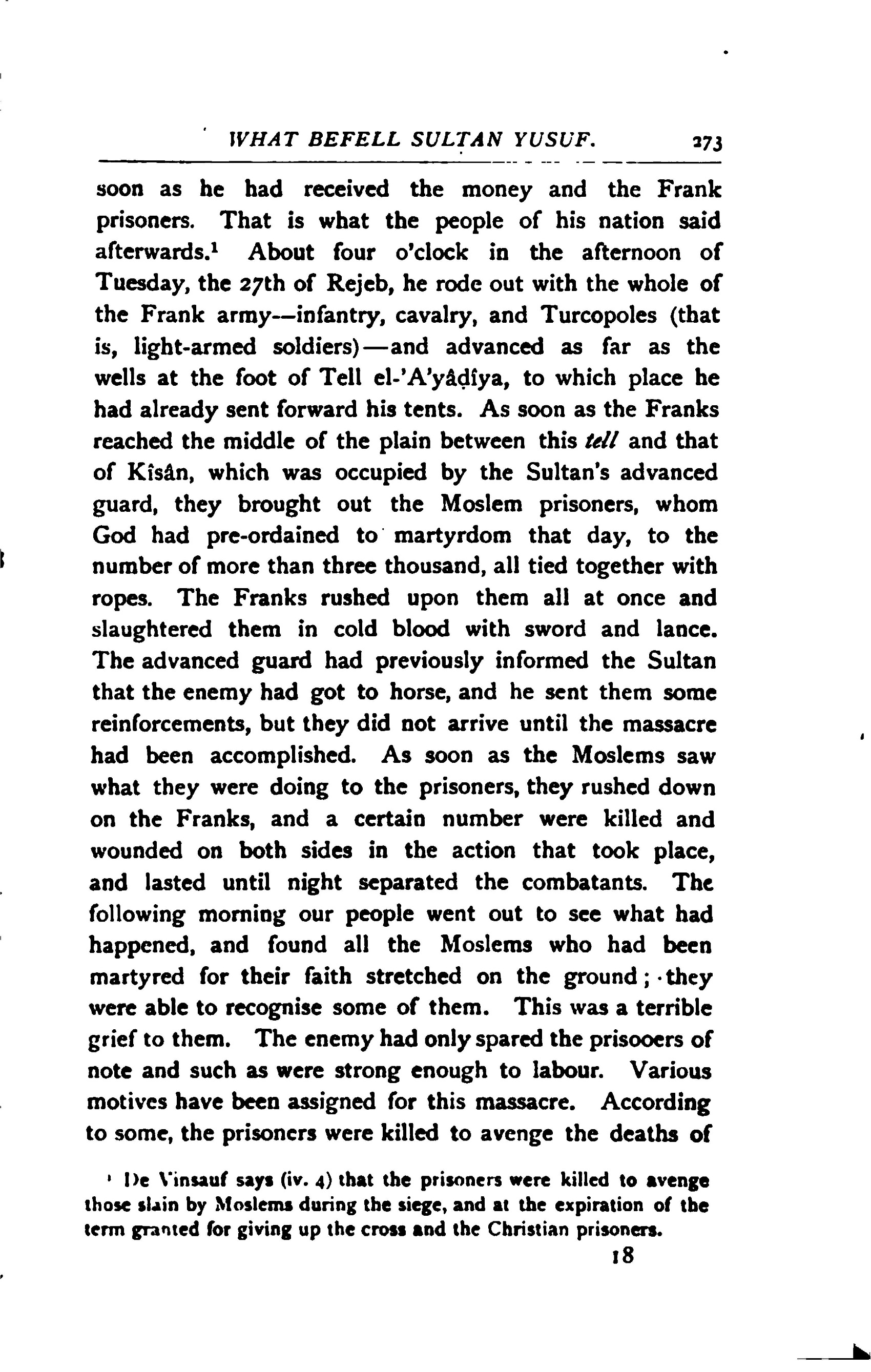
The capitulation called for money, for the release of Christian prisoners and for the return of the relic of the True Cross. The garrison’s fate depended on the negotiations that followed. Each side distrusted the other’s assurances about the sequence of payment and release. The Latin narrative explains Richard’s decision by accusing Saladin of delay. The Muslim biographer Baha al-Din Ibn Shaddad describes the prisoners’ deaths as a violation of the promises made when they surrendered.
Witnesses on the plain
Baha al-Din records the movement of the Frankish troops and the response of Saladin’s advance guard. Reinforcements arrived too late. On the next morning men from the Muslim camp went out to the bodies and recognised some of the dead. His estimate exceeds three thousand. He reports several explanations that circulated for Richard’s decision and says that some prisoners were spared. His description of the aftermath is firmer evidence than any proposed reconstruction of the king’s private deliberations.
References
- Baha al-Din Ibn Shaddad, The Life of Saladin. English edition of the Palestine Pilgrims’ Text Society (1897). See chapter CXVI on the captives, the chapters on the march to Arsuf, and the closing negotiations at Jaffa.
- Itinerarium peregrinorum, in Chronicles of the Crusades. Accessible English edition, 1882. The narrative of Richard’s expedition appears under the older attribution to Geoffrey of Vinsauf. See the sections on Cyprus and Acre.
Illustration. Palestine Pilgrims’ Text Society. Original image and catalogue record. Public domain. Resized for display.
