 Knights Templar
Robert de Sablé
Robert de Sablé came east with the Third Crusade in the company of Richard I of England. An Angevin lord before he entered the Temple, Robert became master around 1191. His short tenure coincided with the recovery of Acre and with the order’s unsuccessful attempt to govern Cyprus.
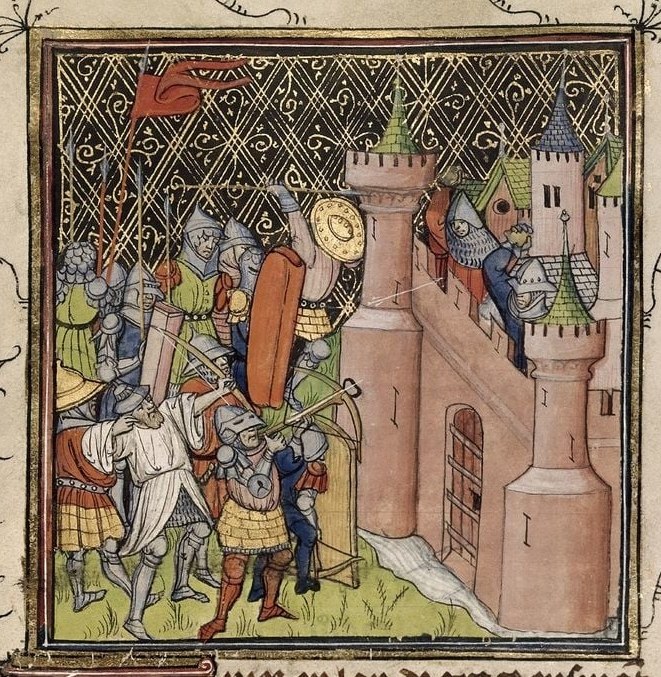
A master in a recovered city
The siege of Acre was still in progress when Richard reached the coast. By October 1191 the port was in Frankish hands. On the thirteenth of that month Richard confirmed the privileges of the Pisan merchants who had helped his forces. The act gives the place of issue as the house of the Temple in Acre and identifies Robert among the witnesses as master. Within months of the surrender, the order had premises where a king could conduct business with an overseas trading community.
The purchase of Cyprus
Richard had conquered Cyprus on his outward journey. The Templars agreed to take the island from him for a price. Governing Cyprus was a different proposition from holding a castle or collecting rents on an estate. The brothers would have to collect revenue, administer a population and maintain a government with the small force they had sent. Resistance came to a head at Nicosia at Easter 1192. The brothers retained the city in the immediate fighting but abandoned the purchase.
A mainland headquarters
Government of Cyprus subsequently passed to Guy of Lusignan. The Temple kept interests on the island and continued to serve on the mainland. Robert’s own place was with the crusading army and its recovering coastal settlements. The act for the Pisans shows how quickly Acre had resumed its role as a meeting place for soldiers, rulers and merchants. By about 1193 Gilbert Hérail had succeeded him.
References
- Richard I’s confirmation for the Pisans, 1191. The Crusades Regesta, RRR 1316. Issued at the Temple in Acre, 13 October. The witnesses include Robert as master.
- Les familles d’outre-mer, masters of the Temple. Du Cange, revised by E.-G. Rey (1869), pp. 875–883. The editor compares witness lists and corrects earlier attempts at the succession.
- Malcolm Barber, The Templars. A historical survey of the early community, Iberian frontier, western estates and military service in the East.
- The Templar of Tyre, Chronicle. Part III of Les Gestes des Chiprois, edited by Gaston Raynaud (1887). See §306 on the earlier captivity of Beaujeu and Gaudin and the entries for 1289–1291 on Tripoli, Acre and the remaining coastal towns.
Illustration. Virgil Master, late fourteenth century. Original image and catalogue record. Public domain. Resized for display.
