 Knights Templar
Nicosia
Nicosia lies inland on the central plain of Cyprus, between the mountain ranges that run across the island. Latin writers called it Nicosia. Its Greek name, Lefkosia, remains in use. In 1192 the town was the scene of a violent confrontation during the few months of Templar rule in Cyprus.
The castle and the market
The later Chronicle of Amadi preserves a local account of the Uprising at Nicosia (1192). It describes a Saturday market, a castle, streets and a church where inhabitants sought sanctuary. The castle gave Arnaud Bouchard and the Latins who joined him a temporary refuge. The chronicler thought it weak before the repairs attributed to Guy of Lusignan. These are glimpses of a twelfth-century town whose defences subsequently changed several times.
Seat of the island kingdom
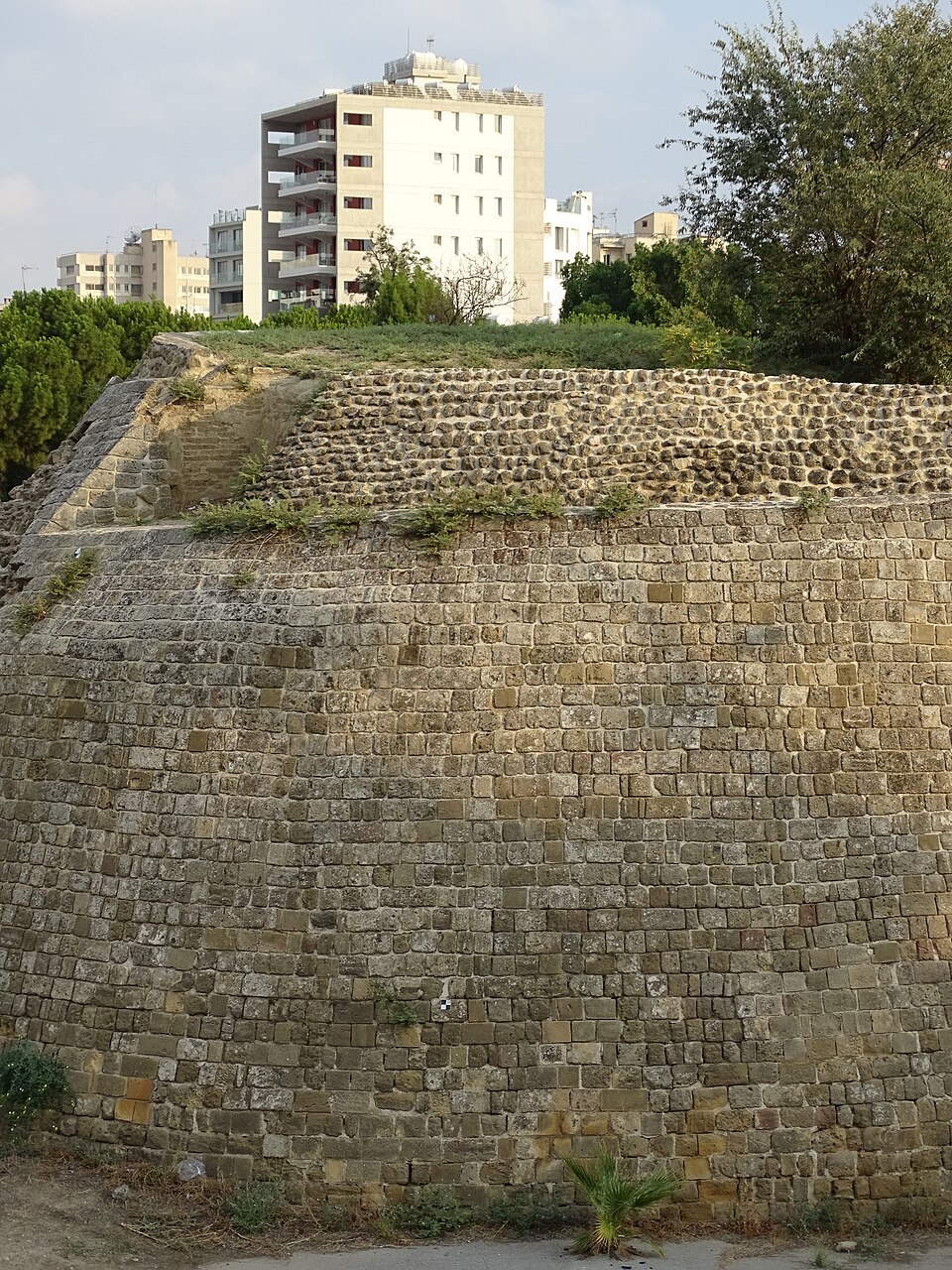
Under the Lusignans, Nicosia was the seat of the royal court and the Latin archbishop. It was an inland centre of administration, while Famagusta became a principal harbour. Refugees reaching the island after the loss of Acre entered a kingdom with its own court, bishoprics and landed families. The conspicuous walls that surround the old town today were built under Venetian rule, centuries after the Templar rising.
References
- Chronique d’Amadi, on the Templar purchase of Cyprus and revolt at Nicosia. Ed. René de Mas Latrie, vol. I, pp. 83–86. A later compilation. The editor’s notes compare variant names and earlier accounts.
- Neophytos, Concerning the Misfortunes of Cyprus. Greek text with English translation in C. D. Cobham, Excerpta Cypria, pp. 9–13. The preceding extract, pp. 6–9, gives the English expedition’s account.
- The Templar of Tyre, Chronicle. Part III of Les Gestes des Chiprois, edited by Gaston Raynaud (1887). See §306 on the earlier captivity of Beaujeu and Gaudin and the entries for 1289–1291 on Tripoli, Acre and the remaining coastal towns.
Illustration. Adam Jones from Kelowna, BC, Canada. Original image and catalogue record. CC BY-SA 2.0. Resized for display.
