 Knights Templar
William of Châteauneuf
William of Châteauneuf was master of the Knights Hospitaller during the Battle of La Forbie in 1244. An agreement from the previous year shows him exercising authority in a matter that joined the order’s central government to the estates of a particular castle.
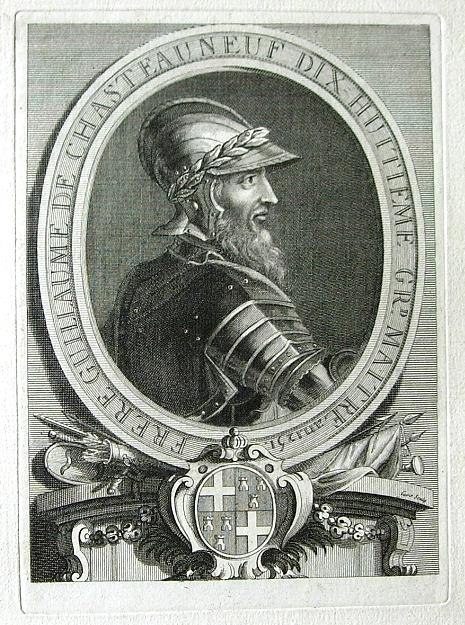
From marshal to master
The Maraclea settlement of 1241, issued at the bishop’s palace in Tripoli, places William among the Hospitallers as their marshal. Richard de Bures and Peter of Saint-Romain appear separately in the Templar group. By May 1243 William was master of the Hospital. In the Tripoli boundary settlement of 1243 he acted with the consent of his convent and chose the Templars Richard and Renaud de Claincourt as arbitrators. Peter chose the Hospitallers Hugh Revel and William Chan in return.
Wheat for the hospital
In August the order negotiated with John of Gibelet over the supply of flour to its house in Tripoli. The resulting Milling agreement at Tripoli gave the brothers a weekly allowance of free milling. William promised in return to abandon older claims on the mill. The beneficiaries included the sick people the brothers cared for. Those provisions put one of the duties of a Hospitaller master in unusually concrete terms.
Capture and return
William was taken prisoner at the Battle of La Forbie in 1244. His captivity interrupted his government of the Hospital but did not end his tenure. In April 1256 Bohemond VI of Antioch issued him a release of claims left over from the prince’s reign and those of his predecessors. William’s name in that later agreement is direct evidence that he resumed the public work of his office.
References
- Settlement over Maraclea and Le Chamel, 18 November 1241. Cartulaire général des Hospitaliers, II, no. 2280. The terms provide for custody of deeds and payment of a rent. The witnesses at the bishop’s palace are grouped by status on p. 596.
- Boundary settlement between the Temple and the Hospital, May 1243. Old French text, Joseph Delaville Le Roulx, Cartulaire général de l’ordre des Hospitaliers, vol. II, no. 2296, pp. 602–603. The names of the arbitrators, the landmarks and Richard’s sealing clause appear on printed p. 603.
- John of Gibelet, milling agreement with the Hospital, August 1243. Cartulaire général des Hospitaliers, II, no. 2298, p. 604. Old French text and later endorsement. The grant specifies the beneficiaries, weekly allowance, measure and witnesses.
- Bohemond VI, release of claims against the Hospital, April 1256. Cartulaire général des Hospitaliers, II, no. 2807, p. 813. The prince describes the reciprocal release, names his witnesses and refers to his lead seal.
- Les familles d’outre-mer, masters of the Temple. Rey’s revised edition, pp. 882–889, including variant names, dated documents and the contested succession after La Forbie.

Illustration. Laurent Cars (1699-1771), engraver. Original image and catalogue record. Public domain. Resized for display.
