 Knights Templar
Second Crusade
The Second Crusade followed the capture of Edessa by Zengi in December 1144. The kings Louis VII of France and Conrad III of Germany took armies east. Their principal campaign in the Kingdom of Jerusalem ended with the withdrawal from Damascus in July 1148. Other expeditions granted crusading privileges fought in Iberia and the Baltic.
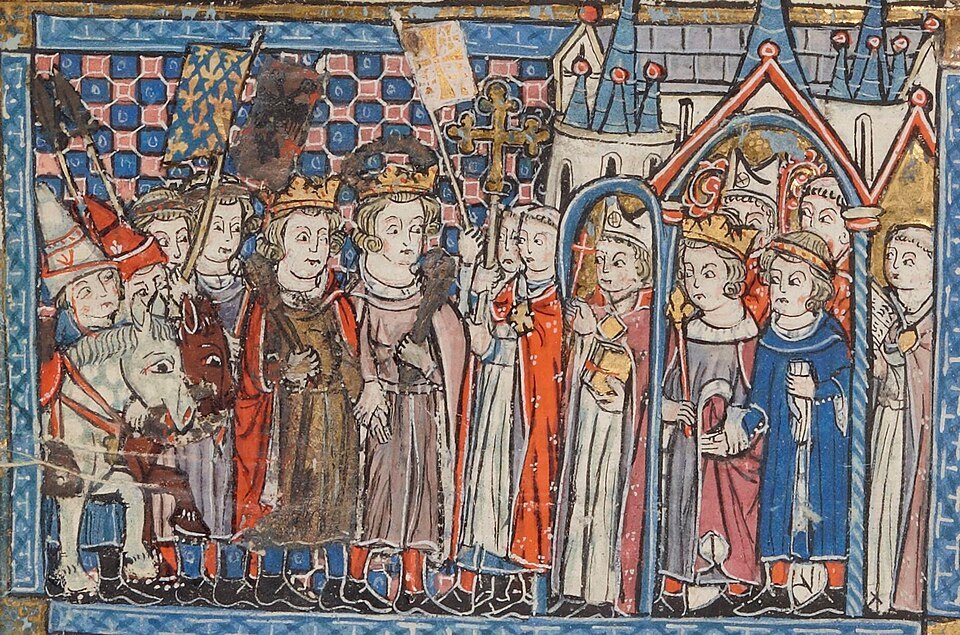
Preaching and departure
Bernard of Clairvaux helped recruit men for the expedition and tried to stop attacks on Jewish communities in the Rhineland. Ephraim of Bonn recalled both the terror caused by the preaching of violence and Bernard’s intervention. Conrad’s letters give a different view of mobilization. Once the armies reached Anatolia, illness, shortages and losses forced the king to seek help from his French allies and the Byzantine court.
The military orders and the siege
Templars accompanied Louis’s army through Anatolia. Once he reached Antioch, Louis wrote home about the losses on the journey and asked his regent to send more resources. At a council near Acre in June 1148 the western leaders and the local barons chose to attack Damascus. Ibn al-Qalanisi records the calls for help sent by Unur and the fighting seen by the city’s inhabitants. After four days the attackers withdrew.
A dispute over failure
Conrad complained of betrayal in a letter written after the retreat. William of Tyre, writing later, recorded conflicting explanations. The accounts agree that the Siege of Damascus (1148) failed. They give no common verdict about who caused the change of position outside the city. Neither western king recovered Edessa, and the military orders returned to defending a kingdom still exposed to its northern neighbours.
References
- William of Tyre, History, book XVI. Chapters 4–7 on the capture and sack of Edessa and the division of Zengi’s lands. Chapters 14–16 on the attempt to recover the city. Latin text.
- Ephraim of Bonn, Sefer Zekhirah (Book of Remembrance). Translated by Shlomo Eidelberg in The Jews and the Crusaders: The Hebrew Chronicles of the First and Second Crusades (1977).
- Ibn al-Qalanisi, The Damascus Chronicle of the Crusades. Extracts from the Arabic chronicle, translated by H. A. R. Gibb (1932), pp. 282–287.
- Letters of Conrad III during the Second Crusade. Two letters to the abbot of Corvey and Stavelot, translated in Translations and Reprints from the Original Sources of European History, vol. I, no. 4.
- William of Tyre, The Fiasco at Damascus. History, book XVII, chapters 3–6, translated by James A. Brundage in The Crusades: A Documentary History (1962), pp. 115–121, with his introduction.
- Odo of Deuil, De profectione Ludovici VII in Orientem. Edited and translated by Virginia Gingerick Berry (1948).
- Louis VII to his regent in France, March 1148. The Crusades Regesta, RRR 482. Letter from Antioch on the losses in Anatolia and the need for more resources.
Illustration. Anonymous illuminator, northern France. Original image and catalogue record. Public domain. Resized for display.
