 Knights Templar
Limassol
Limassol lies on the south coast of Cyprus. The sea crossing from here to the Syrian and Palestinian ports made it a useful landfall for fleets approaching the eastern Mediterranean. In May 1191 Richard I of England landed here during the expedition that overthrew Isaac Komnenos of Cyprus.
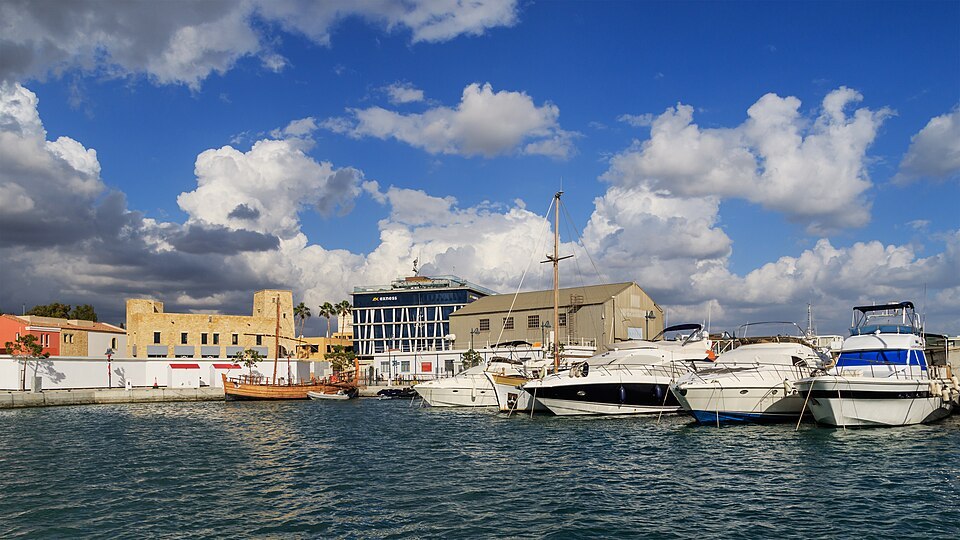
The fleet in 1191
Storms had separated ships carrying pilgrims, supplies and members of Richard’s household. The accounts give different weight to Isaac’s treatment of the survivors. English writers treated it as a grievance justifying intervention. The Greek monk Neophytos the Recluse remembered the landing as the beginning of another round of suffering for islanders. At Limassol Richard married Berengaria of Navarre before continuing inland and accepting Isaac’s surrender.
A port facing the mainland
Sea traffic linked Cyprus with Acre and other ports on the coast. When mainland positions fell in 1291 that connection carried refugees and surviving members of the military orders in the opposite direction. The loss of the ports made the island a base for expeditions back toward the mainland, including the attempt to hold the island of Ruad.
References
- Itinerarium peregrinorum, in Chronicles of the Crusades. Accessible English edition, 1882. The narrative of Richard’s expedition appears under the older attribution to Geoffrey of Vinsauf. See the sections on Cyprus and Acre.
- Neophytos, Concerning the Misfortunes of Cyprus. Greek text with English translation in C. D. Cobham, Excerpta Cypria, pp. 9–13. The preceding extract, pp. 6–9, gives the English expedition’s account.
- Templar of Tyre, account of Acre and the refugees. Les Gestes des Chiprois, ed. Gaston Raynaud, §§479–516. See §§498–508 on the city and §§509–516 on Sidon and Cyprus.
- Templar of Tyre, expeditions off Tortosa. Les Gestes des Chiprois, §§618–623, particularly Amaury’s landing and the report brought from the Mongol commander.
Illustration. A.Savin. Original image and catalogue record. FAL. Resized for display.
