 Knights Templar
Ruad
Ruad, or Arwad, is a small island off Tortosa on the Syrian coast. From Cyprus it offered western forces a place to disembark within sight of the mainland. In the Arabic annals the same short crossing explains why the Mamluk governor of the coast regarded its occupation as a danger to travelers.
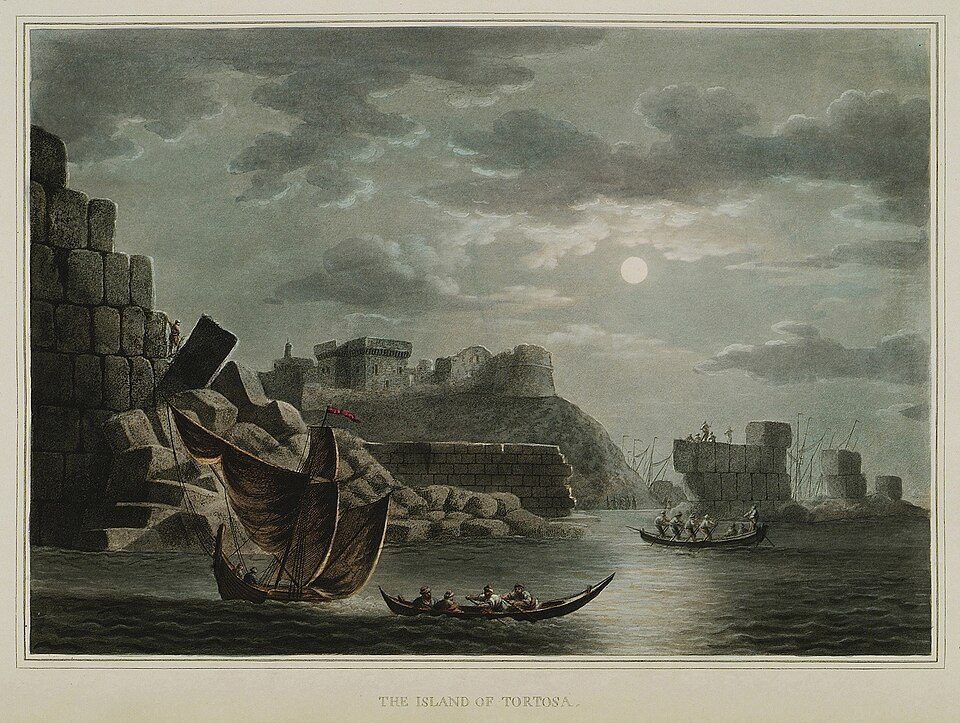
An island and its mainland port
The Templar of Tyre called Ruad the island of Tortosa. He estimated the passage to the harbor at half a league and said the nearest mainland lay closer still. His account follows troops moving from ship to island, from island to town and back again. Possession of the island did not give them permanent possession of Tortosa.
A rendezvous that failed
In November 1300 Amaury of Lusignan crossed with men from Cyprus. The Temple and Hospital joined him. They were expecting an army connected with the Mongol ruler Ghazan. After a short stay on the mainland the Franks withdrew to Ruad. When word came that the Mongol forces had gone home, Amaury and the expedition described by the chronicler returned to Cyprus. A Templar garrison subsequently remained on the island.
The view from the coast
Abu al-Fida said that the men based on Ruad intercepted Muslims traveling along the shore. In 1302 the coastal governor obtained ships from Egypt, and the Mamluks took the island. The Fall of Ruad ended this offshore attempt to recover a base on the mainland. Its survivors included prisoners who were taken to Egypt.
References
- Templar of Tyre, expeditions off Tortosa. Les Gestes des Chiprois, §§618–623, particularly Amaury’s landing and the report brought from the Mongol commander.
- Abu al-Fida, Annals, the conquest of Arwad. Historiens orientaux, I, p. 165, under Muharram 702 AH. The account identifies the coastal governor, the sultan and the fate of the island.
- Chronique d’Amadi, campaign and fall of the island of Tortosa. Chroniques d’Amadi et de Strambaldi, ed. René de Mas Latrie, vol. I, pp. 237–239. The later Cypriot compilation names the negotiator and distinguishes archers, brothers and civilians.

Illustration. Luigi Mayer. Original image and catalogue record. Public domain. Resized for display.
