 Knights Templar
Gibel
Gibel, medieval Jableh on the coast of Syria, was the subject of conflicting grants made during the succession dispute at Antioch. The name appears as Gibel or Gabulum in western sources. The coastal town had property, trading revenues and inhabitants whose obligations could outlast the prince who had assigned them.
A gift before possession
In 1207 Raymond-Roupen of Antioch promised the city to the Hospital. A municipal record later described the Hospitaller banner being raised and the place handed over to the castellan of Margat. The Templars claimed the same town by a grant from Bohemond IV of Antioch. Both orders could thus produce a donor with a plausible claim to princely authority.
The award of 1221
At Acre the two masters accepted Pelagius of Albano as arbitrator. Pelagius divided the town and its territory between the orders and preserved earlier endowments. The Latin award is short enough to read on a single printed page. Its opening names the rival donors and its closing lines date the decision to 15 October.
References
- Raymond-Roupen’s grant to the Hospital, 1207. The Crusades Regesta, RRR 1589. The young claimant promises confirmation on reaching majority, and Leo seals the act.
- Delivery of Gibel to the Hospital. The Crusades Regesta, RRR 1634. The register marks this municipal act with an asterisk. It recounts the raising of the order’s banner and names the castellan of Margat.
- Pelagius of Albano, award concerning Gibel, 15 October 1221. Latin text. Delaville Le Roulx, Cartulaire général de l’ordre des Hospitaliers, vol. II, p. 297, no. 1739. The ruling sets out the competing grants and the penalty for refusing the arbitration.

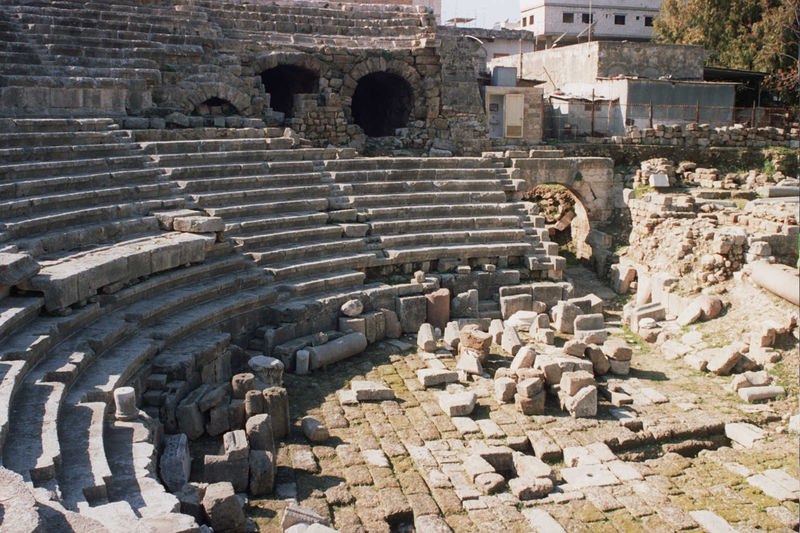
Illustration. LorisRomito. Original image and catalogue record. CC BY-SA 3.0. Resized for display.
