 Knights Templar
Stephanus of Aila
The monastery at Mount Sinai identifies Stephanus of Aila as the architect of the sixth-century enclosure built under Justinian I. Aila lay at the head of the Gulf of Aqaba. The attribution preserves the name of someone responsible for turning an imperial commission into a building on a steep mountain site.
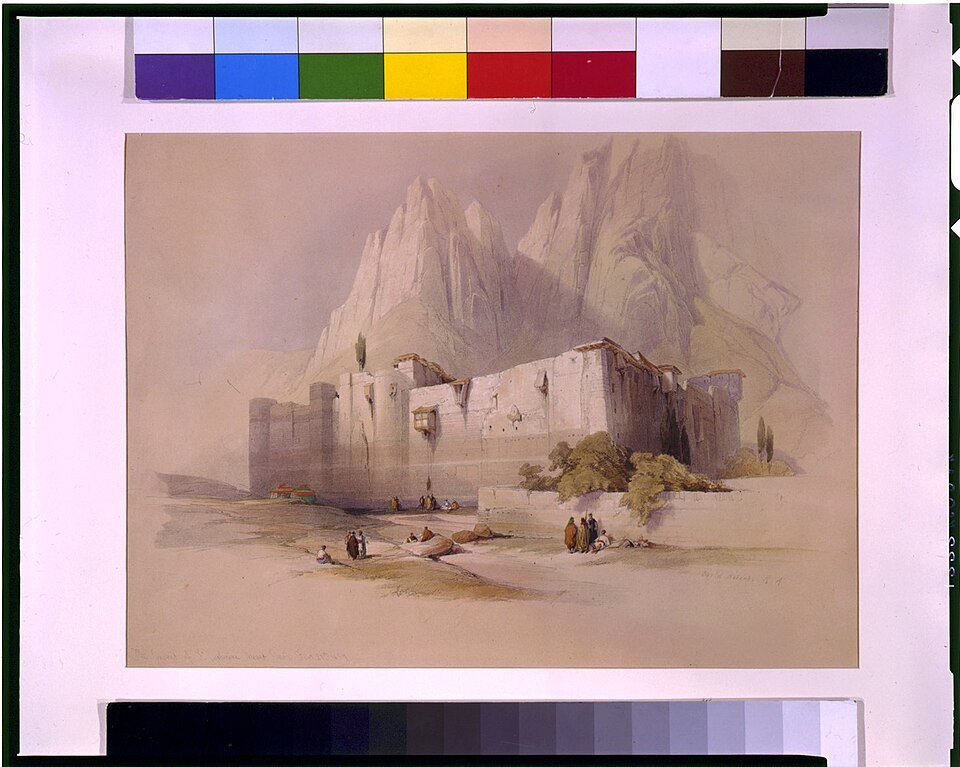
The work at Sinai
Saint Catherine’s Monastery describes how builders leveled the ground for the basilica and enclosed older structures used by hermits. Local granite provided stone for the church. Within the walls there was little room for the broad central courtyard familiar at other monasteries. These features survive alongside later repairs, including rebuilding on the north side.
The limits of the attribution
The community names the architect in its account of the enclosure. It supplies no comparable account of his training, family or later career. The building remained in use for centuries before Philip of Milly recorded receiving a relic there.
References
- A. Bertrand de Broussillon, La Maison de Craon, I, nos. 138–145. Printed Latin texts, pp. 101–105. No. 138 contains Philip’s account, no. 144 Stephana’s certificate and no. 145 Amalric’s letter.
- Holy Monastery of Sinai, Justinian Fortress. The community describes the original enclosure, its architect and the repairs to its north wall.
- Philip of Milly’s gift of relics, 1169. The Crusades Regesta, RRR 825. English abstract. Latin edition in La Maison de Craon, I, no. 138.
Illustration. David Roberts and Louis Haghe, Library of Congress. Original image and catalogue record. Public domain. Resized for display.
