 Knights Templar
Hugh of Dampierre, Templar
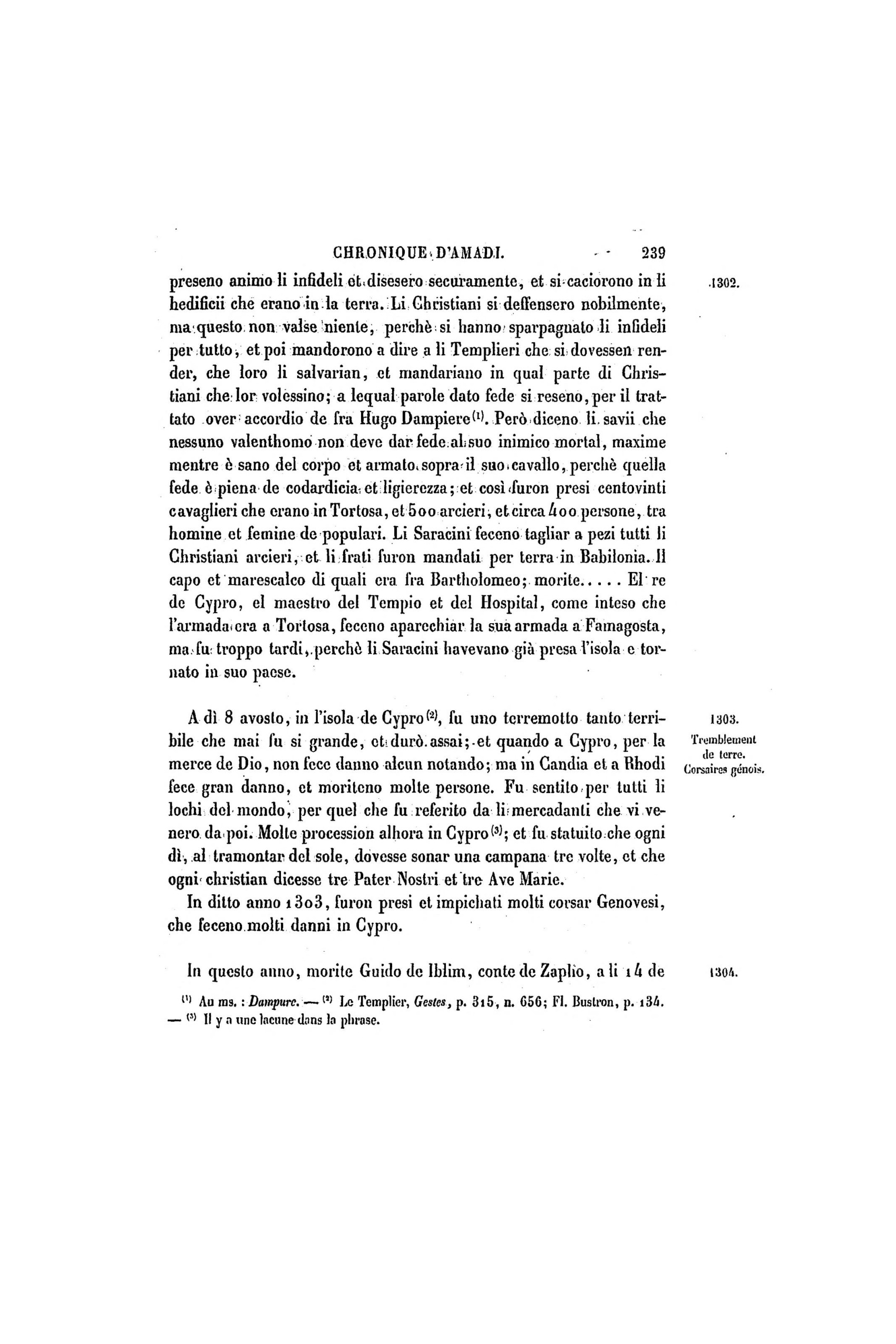
Hugh of Dampierre was the Templar brother whom the Chronicle of Amadi names in the surrender of Ruad in 1302. The account singles him out from the other brothers because it attributes the agreement ending resistance to him.
The promise of passage
In the chronicle the defenders had fallen back to a tower when the attackers called on them to surrender and offered to send them to a Christian destination. Hugh appears at the moment the defenders accepted those terms. The writer then reproaches men who trusted a mortal enemy. That judgment belongs to a narrator writing with knowledge of the outcome.
What can be checked
Abu al-Fida places the Mamluk expedition in 702 AH and reports that prisoners were taken to Egypt. He supplies the names of the governor and sultan who authorized the undertaking. He gives no name for a western negotiator. Hugh’s identity and particular role in the Fall of Ruad therefore rest on the Cypriot account.
References
- Chronique d’Amadi, campaign and fall of the island of Tortosa. Chroniques d’Amadi et de Strambaldi, ed. René de Mas Latrie, vol. I, pp. 237–239. The later Cypriot compilation names the negotiator and distinguishes archers, brothers and civilians.
- Abu al-Fida, Annals, the conquest of Arwad. Historiens orientaux, I, p. 165, under Muharram 702 AH. The account identifies the coastal governor, the sultan and the fate of the island.

Illustration. René de Mas Latrie, ed., Chroniques d’Amadi et de Strambaldi, vol. I. Original image and catalogue record. Public domain. Resized for display.
