 Knights Templar
Fourth Lateran Council
The Fourth Lateran Council met at the Lateran in Rome in November 1215. Pope Innocent III called it to deal with doctrine, the governance of the Latin church and the recovery of the Holy Land. Its last constitution, known from its opening words as Ad liberandam, set out a program for the expedition that became the Fifth Crusade.
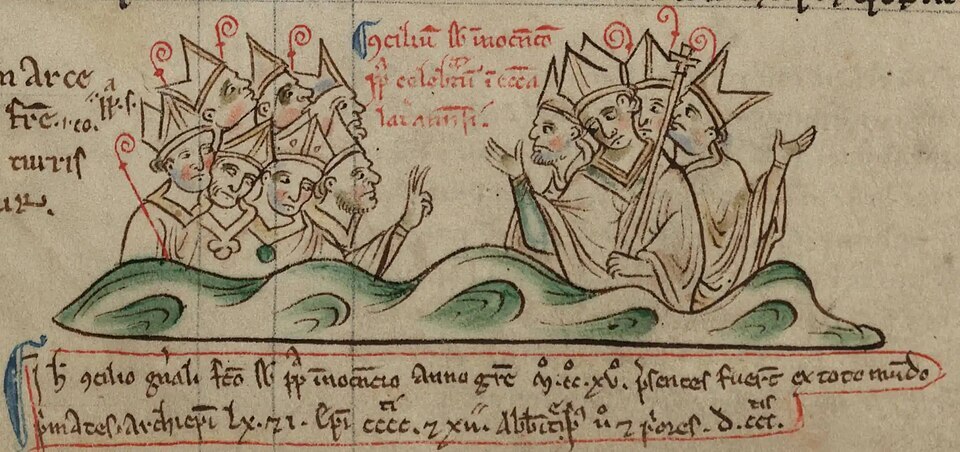
How the army would be supported
The constitution distinguished those who would travel from those who would support them. It protected the persons and possessions of crusaders, sought shipping and supplies, and provided for three years of contributions from church revenues. Most clergy were to pay one twentieth of their income, with exceptions including those going in person. The pope and cardinals pledged one tenth. The rules show how a decision made in Rome could affect a parish whose priest never went near the sea.
The council and those outside the Latin church
Other constitutions imposed restrictions on Jewish and Muslim communities in Christian lands, including a requirement that their clothing make them distinguishable from Christians. The council also asserted Latin claims of authority over the Greek church. Those decisions formed part of the same gathering as the call to crusade and had consequences for people who had no voice in planning the expedition. Innocent died in 1216. Pope Honorius III was responsible for carrying the crusade plans forward.
References
- Fourth Lateran Council, constitutions of 1215. Especially constitution 71, Ad liberandam, concerning passage east, taxation, protection of crusaders and shipping.
- William of Chartres to the pope, 1217. The Crusades Regesta, RRR 1767. October letter on provisions, mounts and the proposal to besiege Damietta.
Illustration. Matthew Paris. Original image and catalogue record. Public domain. Resized for display.
