 Knights Templar
On the Misfortunes of Cyprus
On the Misfortunes of Cyprus is a short Greek work by Neophytos the Recluse about political upheaval on Cyprus in the late twelfth century. The author lived through the fall of Isaac Komnenos of Cyprus, the English invasion and the sale of the island. The work survives in a Greek text printed with an English translation in Excerpta Cypria.
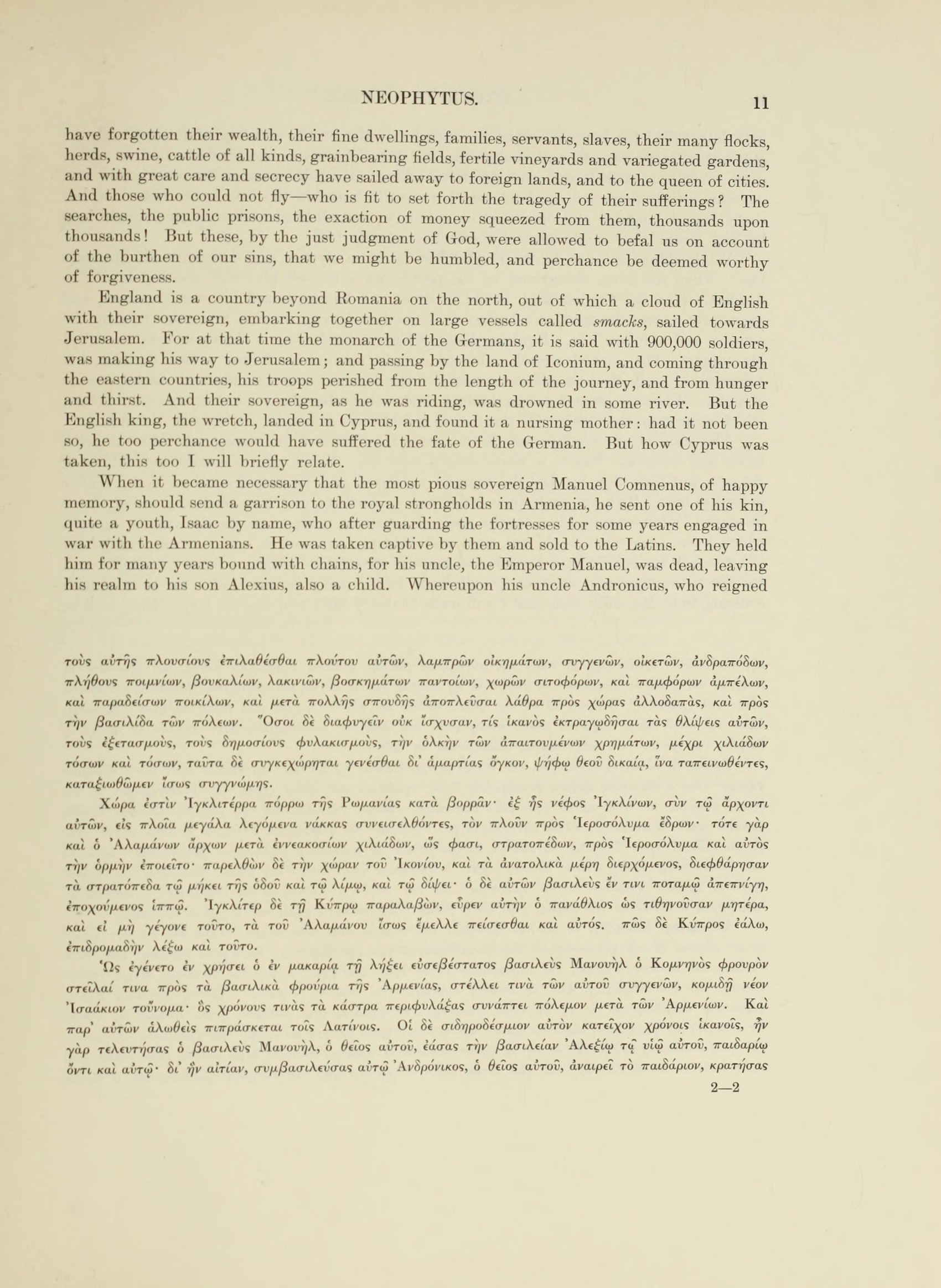
Losses described from the island
Neophytos starts with families who abandoned their houses, vineyards, garden plots and animals. Those who stayed faced imprisonment and demands for money. He treats the island’s political troubles as a religious calamity, interpreting ships arriving from the north through biblical imagery. The contrast with an English crusading narrative is sharpest over Richard I of England. For the king’s followers Cyprus was a fortunate acquisition on the road to Acre. For Neophytos it was a country whose ruler had sold its inhabitants to strangers.
What the monk could know
Neophytos distinguishes some things he had heard from events he describes as part of the islanders’ common experience. His report of the death of Frederick I Barbarossa is one example of news carried to Cyprus. His estimate of the sale price also differs from the later Chronicle of Amadi. Those differences make the work especially valuable for tracing what the conquest meant in Cyprus apart from the intentions recorded by the conquerors.
References
- Neophytos, Concerning the Misfortunes of Cyprus. Greek text with English translation in C. D. Cobham, Excerpta Cypria, pp. 9–13. The preceding extract, pp. 6–9, gives the English expedition’s account.
- Chronique d’Amadi, on the Templar purchase of Cyprus and revolt at Nicosia. Ed. René de Mas Latrie, vol. I, pp. 83–86. A later compilation. The editor’s notes compare variant names and earlier accounts.
- Itinerarium peregrinorum, in Chronicles of the Crusades. Accessible English edition, 1882. The narrative of Richard’s expedition appears under the older attribution to Geoffrey of Vinsauf. See the sections on Cyprus and Acre.
Illustration. C. D. Cobham, Excerpta Cypria (1908). Original image and catalogue record. Public domain. Resized for display.
