 Knights Templar
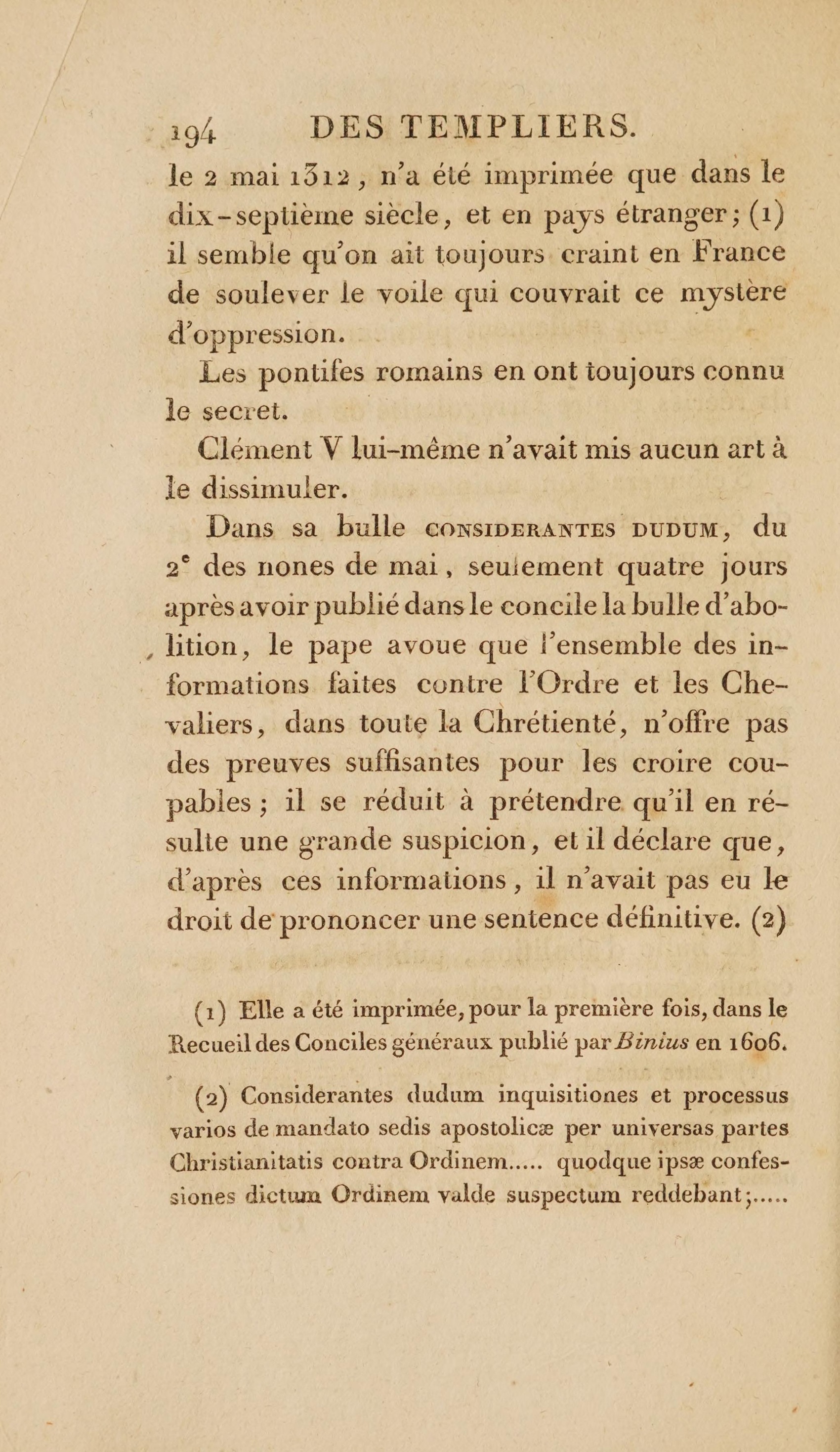
Considerantes dudum
Considerantes dudum was the decree of Pope Clement V governing the treatment of individual Templars after the order’s suppression. It was issued at Vienne on 6 May 1312, four days after Ad providam assigned most of the estates to the Hospitallers.
Who would decide the cases
Clement reserved a small number of cases, including the master and several senior officers, to the papacy. The provincial councils were to judge the other brothers individually. He recognised several distinct situations. Some men had been acquitted, others had confessed, and some had withdrawn earlier admissions. Brothers who had escaped or failed to answer a summons faced separate directions.
A livelihood after the Temple
The decree provided for acquitted men to receive a living from the former order’s property. It allowed suitable men to live in religious houses and warned against gathering too many former Templars in one establishment. Such provisions mattered to men who had surrendered their private property when they professed their vows. The document preserves what the pope ordered. To establish what happened to a particular brother requires a local judgment or an account of payments.
References
- Considerantes dudum, Latin opening and discussion. F.-J.-M. Raynouard, Monumens historiques relatifs à la condamnation des chevaliers du Temple, p. 194, n. 2. The note reproduces the opening in Latin. The complete decree is in the conciliar acts.
- Council of Vienne. Vox in excelso and Ad providam, 1312. Clement V sets out the grounds for suppression and the disposition of the order’s property.
- Le Procès des Templiers. Trial records edited by Jules Michelet, vol. I. The proceedings distinguish testimony about individual brothers from the commission’s inquiry into the order.
Illustration. F.-J.-M. Raynouard, Monumens historiques (1813), p. 194. Original image and catalogue record. Public domain. Resized for display.
