 Knights Templar
Clairvaux Abbey
Clairvaux was a Cistercian monastery in Champagne, founded in 1115 by monks from Cîteaux under their new abbot, Bernard of Clairvaux. Its association with the Knights Templar began in Bernard’s lifetime. As abbot he took part in the Council of Troyes and wrote to the Templars at their master’s request.
Monks, books and the Temple
Clairvaux established daughter houses, and its scribes copied books for the expanding family of monasteries. The abbey’s influence also traveled by letter. Hugh de Payens could call on Bernard for support while the brothers served in the Holy Land. In his reply, Bernard held up their common property and obedience as virtues a monk would recognize. The brothers’ duty to take up arms still set their vocation apart from life at Clairvaux.
Reading the site today
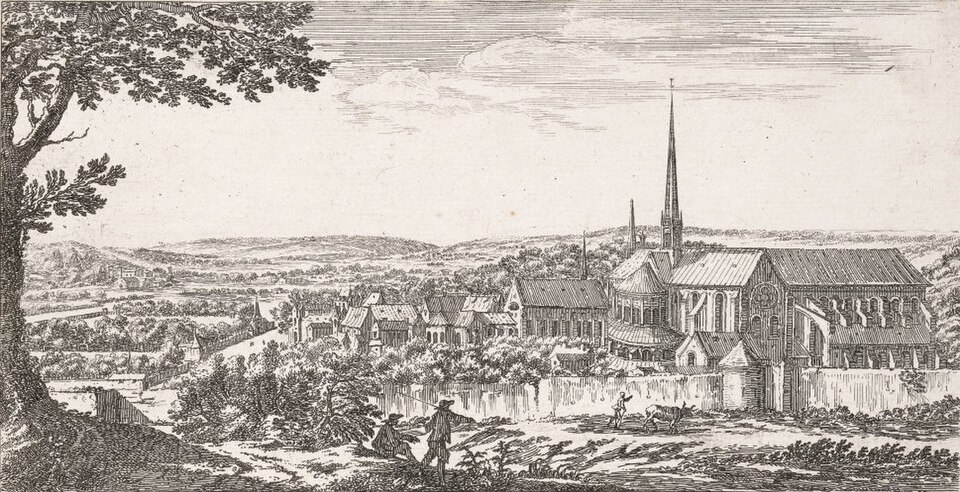
The abbey occupied more than one site during Bernard’s lifetime. The site’s historical plans distinguish the small first settlement of 1115–1135 from the much larger medieval abbey. Its estates came to include vineyards, forges and mills. Major rebuilding began in 1708. The property was confiscated during the French Revolution and became a prison in 1808. Present-day views therefore show buildings that served markedly different communities at different dates.
References
- Association Renaissance de l’Abbaye de Clairvaux, Histoire de Clairvaux. The site association’s history and plans of the first settlement, medieval abbey and eighteenth-century abbey.
- Benedict XVI, Saint Bernard of Clairvaux. For Bernard’s appointment as abbot and the extent of his correspondence.
- The Primitive Rule of the Templars. Prologue, §§5–7, for Bernard’s connection with the Templars.
- Bernard of Clairvaux, In Praise of the New Knighthood. Bernard’s dedication to Hugh and chapter IV on the common life of the brothers.
Illustration. Israel Silvestre. Original image and catalogue record. Public domain. Resized for display.
