 Knights Templar
Henry II of England
Henry II (1133–1189) ruled England and territories stretching the length of western France. The Plantagenet fortress at Chinon lay close to the centre of his continental lands. In 1185 he received envoys who asked him to help defend Jerusalem, among them the patriarch of the city and the master of the Hospital.
The appeal of 1185
Heraclius of Jerusalem and Roger de Moulins reached England after the death of their fellow envoy, the Templar master Arnau de Torroja. Ralph of Diceto places their audience with Henry at Reading. The visitors carried the keys associated with the holy city and its principal church. Henry listened to the appeal and stayed in the West. Money he had sent to the Holy Land was later used to hire soldiers for the campaign of 1187. The funds had reached the kingdom even though the king never did.
The crusade and the succession
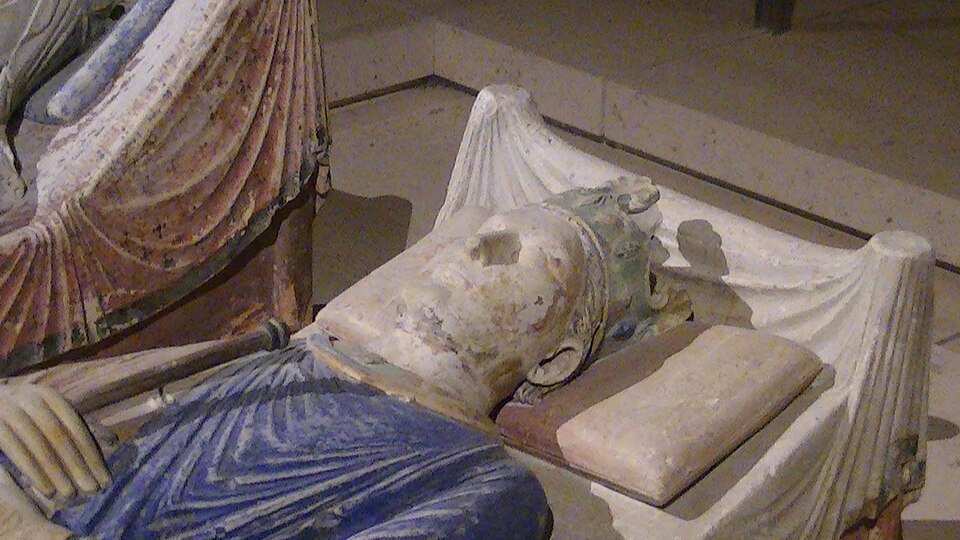
After the Battle of Hattin and the loss of Jerusalem in 1187, Henry and Philip II of France took the cross. Disputes within Henry’s own family and renewed fighting with Philip overtook their preparations. In 1189 Henry retreated to Chinon and died there on 6 July. His son Richard I of England succeeded him and made the journey east. Henry’s tomb effigy survives at Fontevraud Abbey.
References
- Ralph of Diceto, Ymagines historiarum, annals for 1184 and 1185. Opera historica, ed. William Stubbs, vol. II. The notice of Arnau’s death is followed by the account of the surviving envoys’ journey to England.
- Baldwin IV to the envoys in the West, 1184. The Crusades Regesta, RRR 1148. The king reports damage to his kingdom. The editors identify what the envoys carried.
- Royal Fortress of Chinon, history of the site. The monument’s chronology identifies the Plantagenet residence, the siege and the building of the Coudray tower.
- The Royal Household, Richard I Coeur de Lion. Outline of Richard’s reign, captivity, recovery of his French lands and death in 1199.
- Itinerarium peregrinorum, in Chronicles of the Crusades. Accessible English edition, 1882. The narrative of Richard’s expedition appears under the older attribution to Geoffrey of Vinsauf. See the sections on Cyprus and Acre.
- The Battle of Hattin, 1187. Translated extracts from contemporary accounts of the campaign, including the use of Henry II’s funds and the treatment of prisoners.
Illustration. Adam Bishop. Original image and catalogue record. CC BY-SA 3.0. Resized for display.
